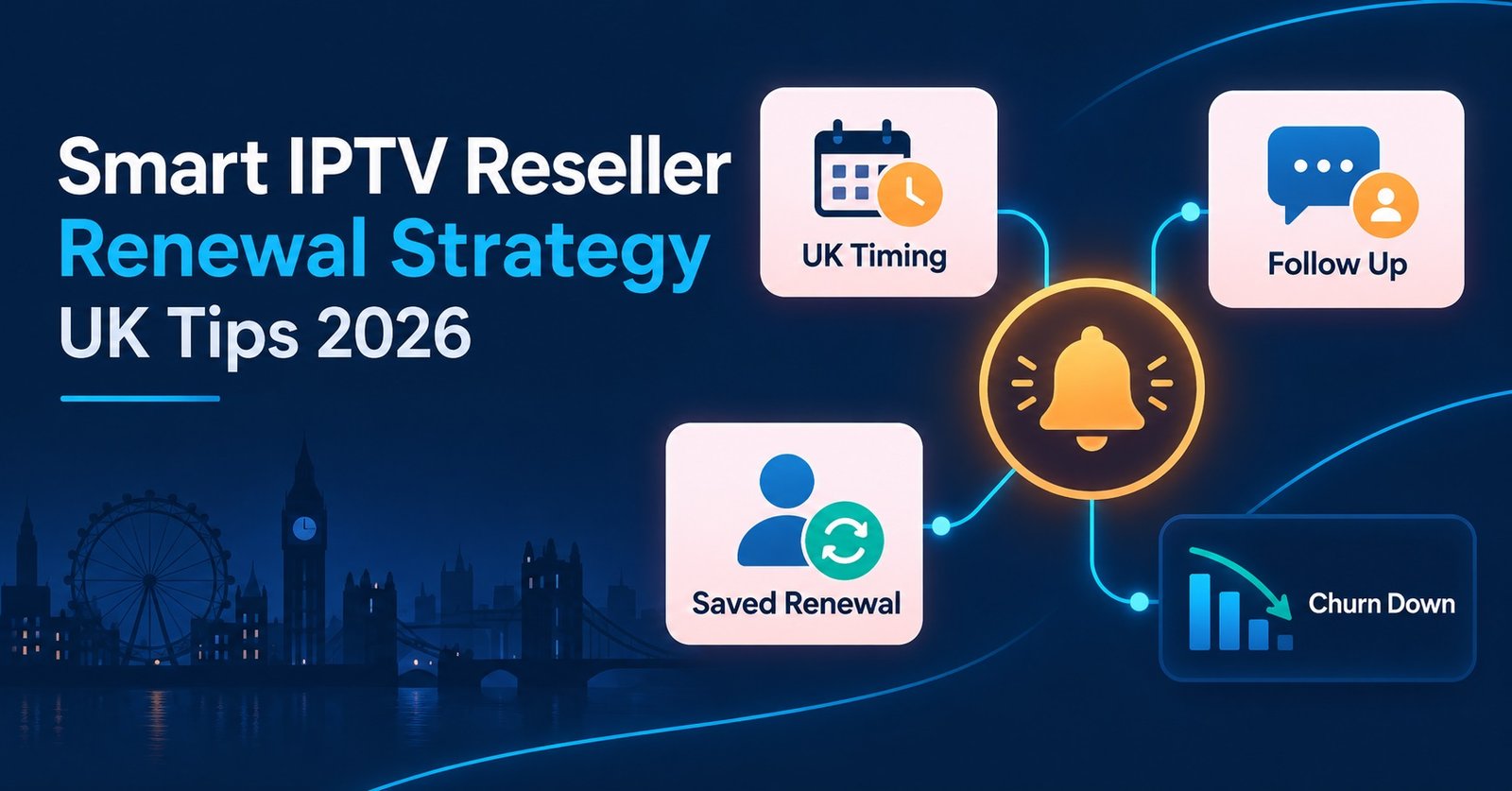

An effective IPTV Reseller Renewal Strategy UK operators can rely on starts weeks before a subscription actually lapses, not on the day the line stops working. Most churn at renewal has nothing to do with the panel itself. It comes down to timing, communication, and how the reseller handles the customer once the free trial excitement has worn off. Get those three things right and renewal becomes routine admin rather than a monthly scramble to save accounts.
Why Renewal Is Where Reseller Businesses Actually Win Or Lose
Onboarding a new subscriber is the easy part. Anyone can activate a line, hand over login details, and collect a payment once. The harder skill, and the one that separates a stable IPTV panel reseller business from one that constantly needs fresh customers to replace lost ones, is what happens in month two, three, and beyond. A subscriber who renews without prompting has already decided the service works for them. A subscriber who lets a line lapse quietly has usually already decided the opposite, often for reasons that had nothing to do with picture quality or channel count.
Treating renewal as an afterthought is the single most common mistake among newer resellers. Credits get bought, lines get created, and then attention moves on to the next sale. Meanwhile the first batch of subscribers reaches their renewal date with no reminder, no easy payment path, and no reason to bother chasing the reseller themselves. They simply stop.
Building A Renewal Timing Window That Actually Works
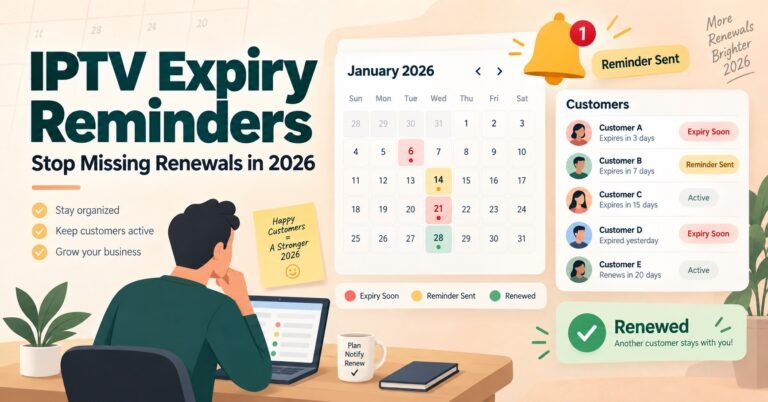
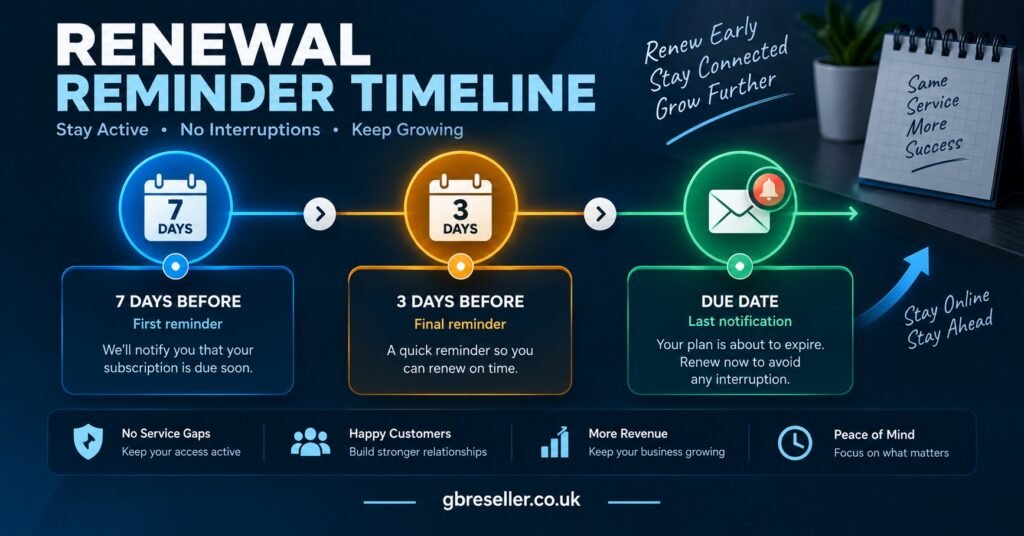
Renewal reminders sent on the expiry date itself are close to useless. By then the subscriber has often already found an alternative or simply forgotten they had the service at all. A working timing window generally looks like this:
Around ten to fourteen days before expiry, send a first message confirming the renewal date and the price. This is not a hard sell. It is a courtesy that also gives the subscriber time to arrange payment.
Around three to five days before expiry, send a second message if there has been no response. Keep it short and include a direct way to pay or confirm.
On the expiry date, if the line has lapsed, a final message acknowledging this and offering a short grace period to reactivate without losing their existing setup often recovers a meaningful share of accounts that would otherwise be lost for good.
Spacing reminders this way respects the subscriber’s time while still catching the two moments people are most likely to act: when they are first reminded, and when the service actually stops working.
Why Subscribers Let Lines Lapse Even When They’re Happy With The Service
Buffering complaints and channel gaps get most of the attention in reseller discussions, but they are rarely the biggest cause of non-renewal. More often it comes down to one of a few quieter reasons.
The subscriber forgot the renewal date existed. Without a calendar reminder or a supplier prompt, most people simply do not track when a service they use daily is due to expire.
Payment friction got in the way. If renewing requires several back and forth messages to agree a payment method, some subscribers will let the line drop rather than deal with the hassle, even if they wanted to continue.
They found the price hard to justify without being reminded of the value. A subscriber who has not thought about what they are paying for in a month is an easy target for hesitation the moment a renewal message appears.
They tried an alternative during a gap in service and never switched back, even after the original issue was resolved.
Understanding which of these applies to a given subscriber base changes how a reseller should structure reminders and offers, rather than applying one blanket approach to everyone.
Protecting Margins When Renewal Pricing Changes
Credit costs and subscriber pricing rarely stay fixed forever, and renewal periods are the natural point where adjustments show up. A reseller who quietly raises prices at renewal without any warning risks losing subscribers who feel blindsided, even if the increase is small. The better approach is transparency well ahead of the renewal date, explaining any change clearly rather than letting the subscriber discover it only when asked to pay more.
Keeping a rough eye on margin per renewal, not just per new sale, also matters more than most resellers initially assume. A subscriber who renews consistently for a year is worth considerably more than three subscribers who each churn after one month, even if the upfront credit cost looks identical. Reviewing renewal rates against the IPTV reseller Panel credits calculator periodically helps confirm whether pricing is still sustainable once genuine renewal behaviour, rather than optimistic assumptions, is factored in.
Renewal Signals Worth Tracking
| Signal | What It Usually Means |
|---|---|
| No response to first reminder | Message may have gone unseen, or price hesitation |
| Line lapses then customer contacts within days | Genuinely wants to continue, forgot the date |
| Repeated late renewals every cycle | Payment friction, needs an easier method |
| No contact after lapse | Likely switched provider or stopped using the service |
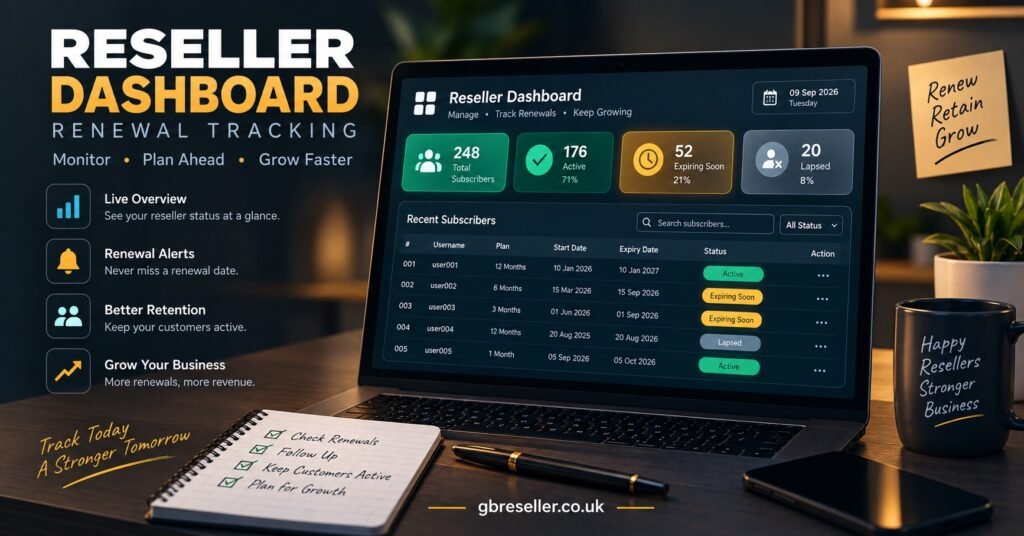
Pro tip: Keep a simple spreadsheet or dashboard note of each subscriber’s renewal history. A pattern of late payments almost always points to a process problem, not a customer problem, and it is usually fixable with a small change to how reminders are sent.
Handling Missed Renewals Without Losing The Customer For Good
A lapsed line is not automatically a lost subscriber. Many people who miss a renewal date still want the service and simply need a low friction way back in. Offering a short grace period, where the existing account can be reactivated at the same terms rather than requiring a completely fresh setup, removes the biggest barrier to winning them back.
Where a subscriber has been unresponsive for an extended period, it is worth accepting that some accounts are genuinely gone and freeing up that capacity rather than sending indefinite reminders. Comparing renewal outcomes against the original expectations set out when comparing an IPTV reseller panel vs subscription model can also clarify whether the churn sits with individual subscriber behaviour or with a mismatch between the pricing model and what customers actually want.
Sub-Reseller Considerations At Renewal
Anyone operating as a sub-reseller faces an extra layer at renewal time, since credits and pricing terms depend on a parent reseller rather than being fully under their own control. Confirming credit availability with the parent account before promising a renewal date to a subscriber avoids the awkward situation of collecting payment for a renewal that cannot immediately be fulfilled. Understanding exactly where responsibility sits between a sub-reseller and the parent account, covered in more detail when weighing IPTV reseller vs sub reseller structures, matters just as much at renewal as it does when first setting up the arrangement.
Setting Renewal Expectations From The Start
Some of the friction at renewal traces back to how the original sale was handled. A subscriber who was never told clearly when their subscription would expire, or how renewal would work, has no reason to expect a message when the date arrives. Being upfront about renewal terms during the initial activation, even briefly, sets a foundation that makes the whole process smoother months later.
Frequently Asked Questions
How far in advance should a UK IPTV reseller send the first renewal reminder?
Around ten to fourteen days ahead of expiry tends to give subscribers enough notice to arrange payment without the message feeling premature or forgettable.
Should pricing stay the same at every renewal?
Not necessarily, but any change should be communicated clearly ahead of time rather than applied silently at the point of payment.
Is a grace period after expiry a good idea?
Yes, for most subscriber bases. A short window to reactivate an existing account without starting from scratch recovers a share of accounts that would otherwise be permanently lost.
How should late or repeated missed renewals be handled?
Look at whether the payment method itself is causing friction before assuming the subscriber has simply lost interest. A pattern of lateness is often a process issue rather than a customer one.
Does renewal strategy differ for sub-resellers?
Yes. Credit availability depends on a parent account, so confirming stock before committing to a renewal date protects both the sub-reseller and the subscriber from a broken promise.
Bringing It Together
A solid IPTV Reseller Panel Renewal Strategy UK businesses can depend on is built from a handful of unglamorous habits rather than any single trick: reminders sent at the right intervals, transparent pricing, a genuine grace period for lapsed accounts, and honest tracking of which subscribers actually stick around. None of it requires new technology or a bigger channel package. It requires treating the weeks around a subscriber’s expiry date with the same attention that went into winning them in the first place. Resellers who build this into a repeatable routine, rather than reacting to each lapsed line individually, tend to see renewal rates climb steadily over time.
Renewal Workflow Checklist
- Confirm each subscriber’s exact renewal date at the point of activation
- Send a first reminder ten to fourteen days before expiry
- Send a second, shorter reminder three to five days before expiry
- Offer a clear, low friction payment method for renewals
- Communicate any pricing change well ahead of the renewal date
- Offer a short grace period for lines that lapse
- Track renewal history per subscriber to spot patterns
- Confirm credit availability with a parent account before promising sub-reseller renewals
- Review renewal margins periodically, not just new sale margins