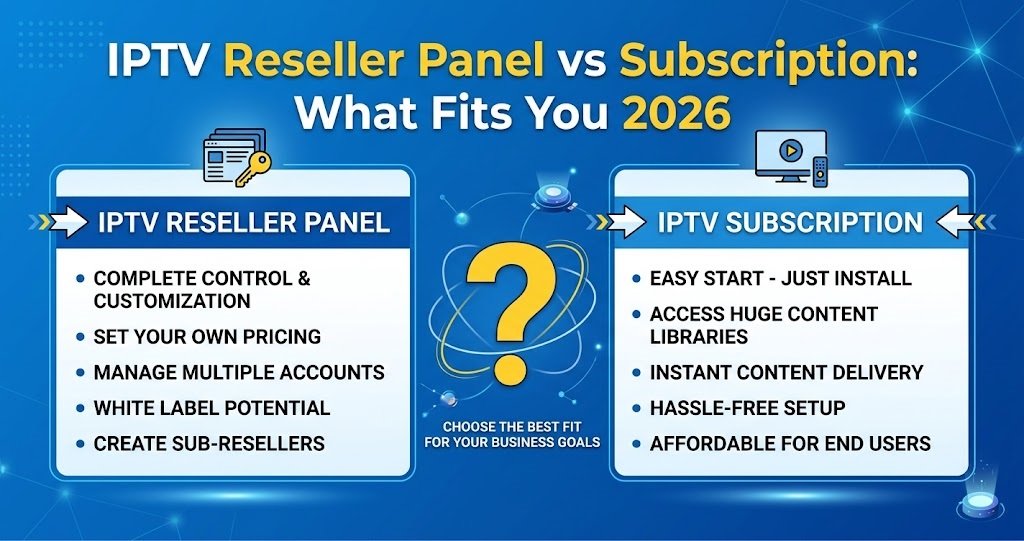

IPTV Reseller Panel vs Subscription decisions usually come down to one thing: control. A reseller panel puts you in charge of a branded dashboard and a stock of credits you activate at your own pace. Reselling someone else’s finished subscriptions means you’re passing on access that another business already owns and prices, with far less say over uptime, renewals or how customers are treated when something breaks. Both routes can generate income. They just carry very different levels of responsibility, and that difference matters more than the price tag on day one.
IPTV Reseller Panel vs Subscription: The Structural Difference
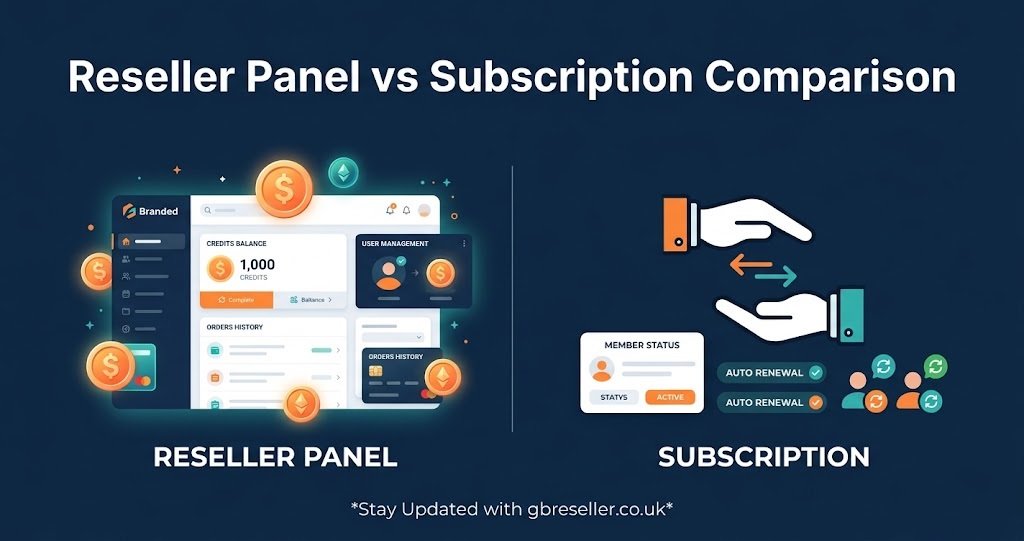
A reseller panel is infrastructure you operate. You buy IPTV reseller Panel credits in bulk, load them into a dashboard under your own branding, and convert each credit into a live subscriber line whenever you get a paying customer. The panel provider handles the servers, the channel feed, and the EPG. You handle pricing, customer communication, and day to day account management.
Subscription reselling works differently. Instead of holding credits, you’re given a batch of already active login credentials, or a referral arrangement, tied to someone else’s panel and someone else’s terms. You sell access, but you don’t control activation, renewal timing, or what happens if that panel changes its pricing overnight. It’s a lighter commitment, but it also hands most of the decision making to a third party you have no dashboard visibility into.
Neither model is inherently better. They suit different levels of commitment, and the right one depends on how much operational responsibility you actually want.
What You’re Actually Paying For
| Factor | Reseller Panel (Credits) | Reselling Existing Subscriptions |
|---|---|---|
| Upfront cost | Bulk credit purchase, tiered by volume | Usually lower per unit, sometimes no bulk buy-in |
| Pricing control | You set your own subscriber pricing | Often capped or suggested by the supplier |
| Dashboard access | Branded panel, full visibility | Rarely provided, little to no visibility |
| Renewal handling | You manage renewals directly | Dependent on the original account holder |
| Support responsibility | Falls on you, backed by the panel provider | Split between you and an unfamiliar third party |
The table isn’t about which column has more ticks. A reseller panel asks for more upfront trust in a provider you’ve vetted, in exchange for real operational control. Subscription reselling asks for less commitment, but that convenience comes from giving up visibility into the very product you’re selling.
Pro tip: Before buying either, ask whether you can see server uptime history or speak to an existing reseller. If a provider won’t share either, treat that as a warning sign regardless of which model they’re offering.
Where the Panel Model Wins
Anyone planning to build a recognisable, repeat-customer IPTV business tends to outgrow UK IPTV subscription reselling quickly. A panel gives you a few things that matter once you have more than a handful of customers.
You set your own margins instead of working within someone else’s pricing ceiling. Credits typically don’t expire, so you’re not under pressure to activate every purchase within a fixed window. And because the dashboard is yours, troubleshooting a customer’s connection issue doesn’t require waiting on a stranger’s support queue first. If you’re serious about scaling past a side hustle, the panel route generally pays for itself once you pass roughly 15 to 20 active subscribers, though the exact break-even point depends on your credit cost and the price you charge.
Where Subscription Reselling Wins
It isn’t always the wrong choice. Someone testing demand before investing in credits, or managing only a small circle of family and friends, may not need a full dashboard yet. The lower commitment means less exposure if the arrangement doesn’t work out, and there’s no bulk purchase sitting unused if customer numbers stay small.
The trade-off is that you’re building a business on top of someone else’s decisions. If that supplier changes terms, raises prices, or simply stops responding, you have no independent infrastructure to fall back on.
Questions to Ask Before You Commit
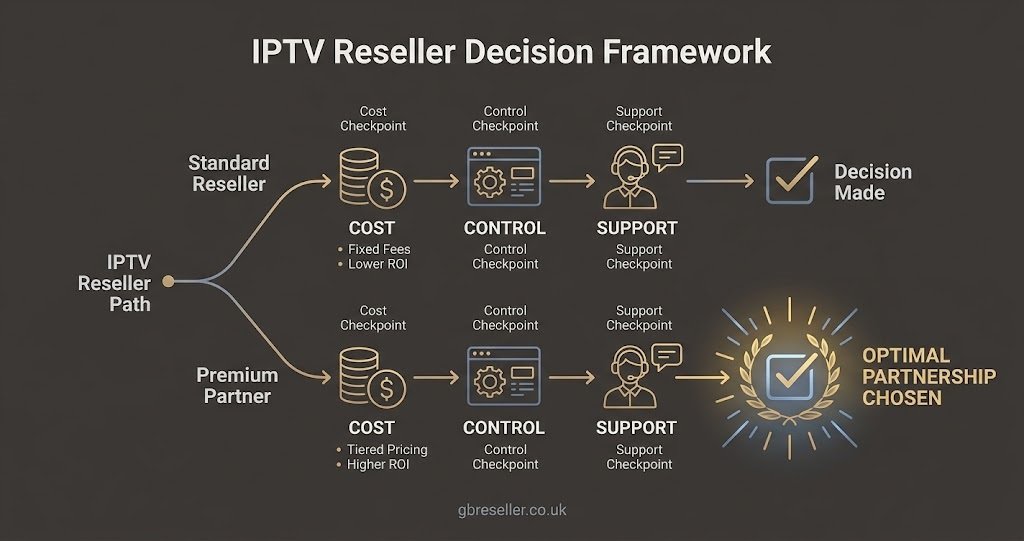
Working through a short set of questions before choosing either path avoids most of the regret that comes from picking the wrong one.
- Do I want direct control over pricing, or am I comfortable working within someone else’s rate card?
- Will I be managing enough subscribers that renewal automation and credit tracking actually matter?
- Can I get a straight answer from the provider about server ownership, or are they vague about infrastructure?
- Am I prepared to handle first-line customer support, or do I need that absorbed by the supplier?
- Is this a long-term business plan, or a short-term test with a handful of customers?
Pro tip: If you’re unsure which model fits, start with a small credits pack rather than the largest available tier. It’s a cheaper way to test panel management without the pressure of unused stock.
Sub-Reseller Path Worth Considering
There’s a middle ground some resellers overlook. Rather than choosing between owning a full panel or reselling loose subscriptions, becoming a sub-reseller under an established reseller gives partial dashboard access without the full upfront credit commitment. Margins are usually thinner because the parent reseller takes a cut, and you’re still dependent on their account staying active, but it can bridge the gap while you decide whether full panel ownership is worth it.
For resellers who eventually want their own dashboard without depending on a shared brand, a white label reseller panel is usually the next step up from sub-reselling.
Pro tip: Ask any parent reseller how long they’ve operated before committing as a sub-reseller under them. New operators are more likely to change terms once they’ve built a customer base.
Frequently Asked Questions
Is a reseller panel more expensive than reselling subscriptions?
Usually the upfront cost is higher because you’re buying credits in bulk, but the per-subscriber cost tends to work out lower once you’re managing more than a small handful of customers.
Can I switch from subscription reselling to a full panel later?
Yes. Many resellers start by testing subscription reselling on a small scale, then move to a credits based panel once they understand demand and are ready to manage a dashboard directly.
Do reseller credits expire?
This depends entirely on the provider’s terms. Some panels allow credits to sit unused indefinitely, while others apply expiry windows, so it’s worth confirming this before buying.
What happens if my subscription reselling supplier disappears?
You lose access with little recourse, since you never held the underlying infrastructure. This is one of the main reasons resellers eventually move toward owning their own panel.
Do I need technical skills to run a reseller panel?
No server setup is required on your end. The provider manages the infrastructure, and your role is limited to using the dashboard, setting prices, and supporting your own customers.
Conclusion
IPTV Reseller Panel vs Subscription isn’t really a question of which model is universally better. It’s a question of how much control and responsibility you’re ready to take on. A panel suits anyone planning to build a proper, scalable business with pricing control and direct dashboard access. Subscription reselling suits a smaller, lower-commitment start, provided you accept the limited visibility that comes with it. If you’re leaning toward ownership, reviewing a reseller credits plan is a reasonable next step before deciding.
Decision Checklist
- Compare per-subscriber cost across both models before committing
- Confirm whether credits expire under your chosen provider’s terms
- Check if you’ll get direct dashboard access or none at all
- Decide how much first-line customer support you’re willing to handle
- Ask an existing reseller about real uptime, not just advertised figures
- Reassess after your first 10 to 15 customers to see which model actually fits