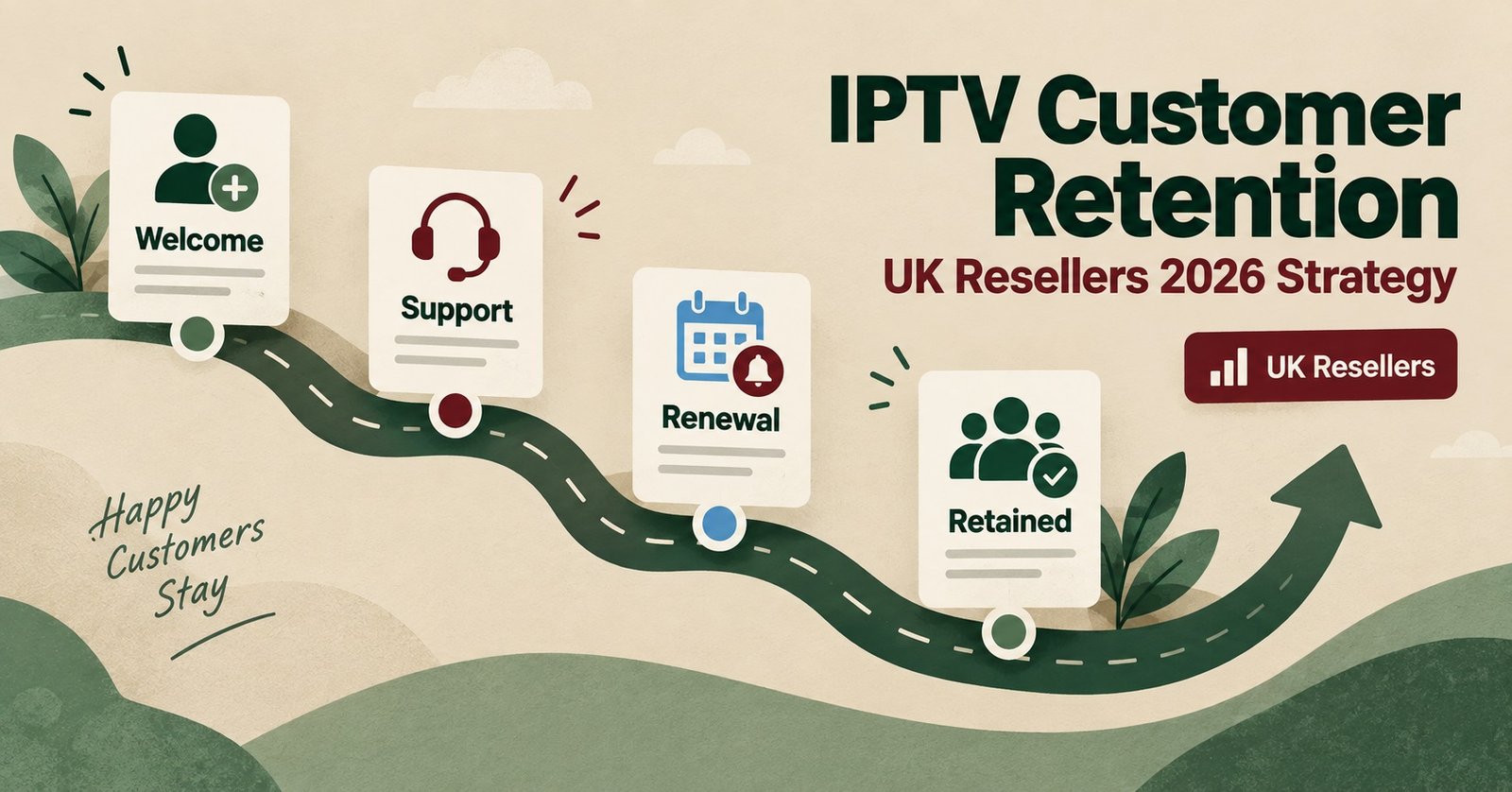

IPTV Customer Retention for UK Resellers comes down to one thing: giving subscribers fewer reasons to look elsewhere before their next renewal date arrives. Most UK IPTV panel resellers lose subscribers not because a rival panel is better, but because something small went wrong and nobody fixed it in time. A missed message, a channel that dropped out during a big match, a renewal reminder that never arrived. None of these are dramatic failures on their own, yet stacked together they explain why so many resellers spend more time replacing lost subscribers than growing their base.
Why Subscribers Leave Before You Even Notice
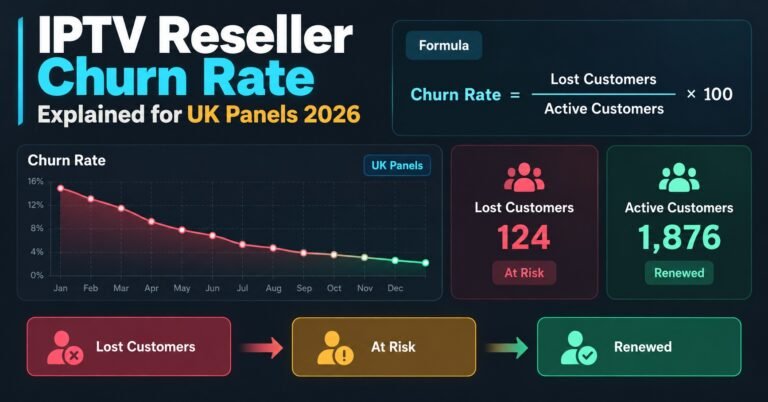
Cancellations rarely happen the moment something breaks. They happen a few days later, quietly, when the subscriber has already decided the service isn’t worth the hassle and simply lets the subscription lapse. By the time a reseller checks the dashboard and sees an inactive line, the decision was made well before that.
The pattern is usually one of a handful of causes. Buffering during peak viewing hours that never gets acknowledged. A device that stopped working after an update and nobody walked the customer through fixing it. A renewal date that passed with no reminder, so the subscriber assumed the service had simply ended and moved on to something else. None of these require a technical overhaul to fix. They require attention at the right moment.
| Warning sign | What it usually means |
|---|---|
| Subscriber hasn’t opened the app in over a week | Losing interest or facing a playback issue they haven’t reported |
| Support message left unanswered overnight | Frustration building before the renewal decision |
| Renewal date passed with no top-up | Reminder didn’t land, or price wasn’t clear upfront |
| Repeated requests for the same channel category | Content expectations weren’t set correctly at signup |
IPTV Customer Retention for UK Resellers Starts at Onboarding
The single biggest retention lever most IPTV panel resellers underuse is the first ten minutes after a subscriber gets their login details. A subscriber who receives clear setup instructions, knows which app to install, and understands roughly what to expect from the channel lineup is far less likely to cancel in the first month than one who is handed a username and password with nothing else.
Set expectations honestly at this stage. If multi-connection use on a shared line reduces performance, say so before the subscriber runs into it themselves. If catch-up content only covers a few days, mention it rather than letting the subscriber discover the limit the hard way. Subscribers tolerate limitations they were warned about. They don’t tolerate limitations that feel like they were hidden.
Pro tip: Send a short setup message within minutes of activation rather than a generic welcome email days later. Speed of response at the start sets the tone for the whole subscription.
Handling Renewals Without Chasing Subscribers Away
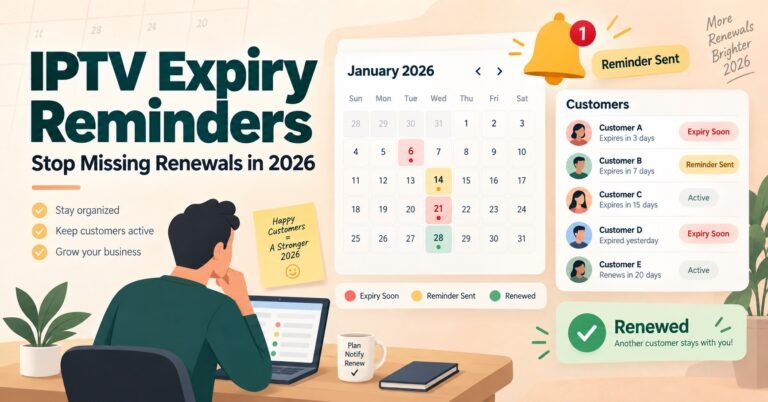
Renewal timing is where a lot of otherwise solid resellers lose subscribers unnecessarily. Reminders sent too late feel like a scramble. Reminders sent too early get ignored and forgotten by the time the actual date arrives. A message roughly three to five days before expiry, followed by a shorter one on the day itself if payment hasn’t come through, tends to strike the right balance without feeling like pressure.
Keep the renewal process itself simple. If a subscriber has to hunt for a payment link or work out pricing from scratch every month, that friction adds up. A renewal strategy built around clear, repeatable steps removes most of the reasons a subscriber drifts away simply because renewing felt like more effort than it should.
Some resellers offer a short grace period rather than cutting a line off the second it expires. This isn’t about giving away free access. It’s about recognising that subscribers sometimes miss a payment date for ordinary reasons and a two or three day buffer before disconnection can be the difference between a renewal and a lost customer who assumes the account is already gone.
Pricing and Loyalty Without Cutting Into Your Margins
Retention doesn’t have to mean discounting. Cutting prices to keep subscribers around usually just trains them to expect a lower price at every renewal, which erodes margins across your whole subscriber base over time. A better approach is rewarding loyalty through small, low-cost gestures rather than blanket price cuts.
A subscriber on their third or fourth consecutive renewal without a single support complaint is worth more to a reseller than a brand new signup, because the cost of acquiring and onboarding them has already been recovered. Recognising that with something modest, an extra few days added at renewal, or priority handling if they ever do raise a support ticket, tends to matter more to subscribers than a small price reduction.
Working out where your margin actually sits matters here too. Before offering any kind of loyalty perk, it helps to know exactly what each renewal is worth once credit costs are accounted for, which is where a proper credits calculator earns its keep rather than guessing at round numbers.
When a Subscriber Is Already Thinking About Leaving
Some subscribers give clear signals before they cancel. A complaint about buffering that isn’t followed up. A question about switching devices that never gets a full answer. A message asking what happens if they stop paying, which is rarely an idle question. Catching these moments and responding properly, rather than with a one-line reply, often saves the subscriber outright.
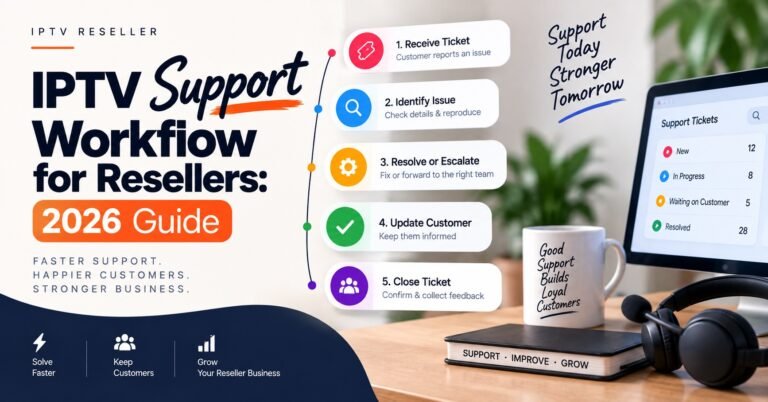
The worst response to a subscriber who sounds ready to leave is silence, or a reply so slow that the subscriber has already made up their mind by the time it arrives. Even when a fix takes a day or two, telling the subscriber what’s happening and roughly when to expect a resolution keeps them engaged rather than assuming the worst.
Pro tip: Keep a short note against subscriber accounts that have raised more than one complaint in a month. A pattern of repeated small issues is a stronger churn signal than any single complaint on its own.
Building Retention Into Everyday Reseller Habits
Retention works best when it isn’t treated as a separate task bolted onto running the panel, but as part of how the dashboard gets checked day to day. Reviewing which lines are approaching renewal, which subscribers haven’t logged activity recently, and which support tickets are still open takes a few minutes but catches problems long before they turn into cancellations.
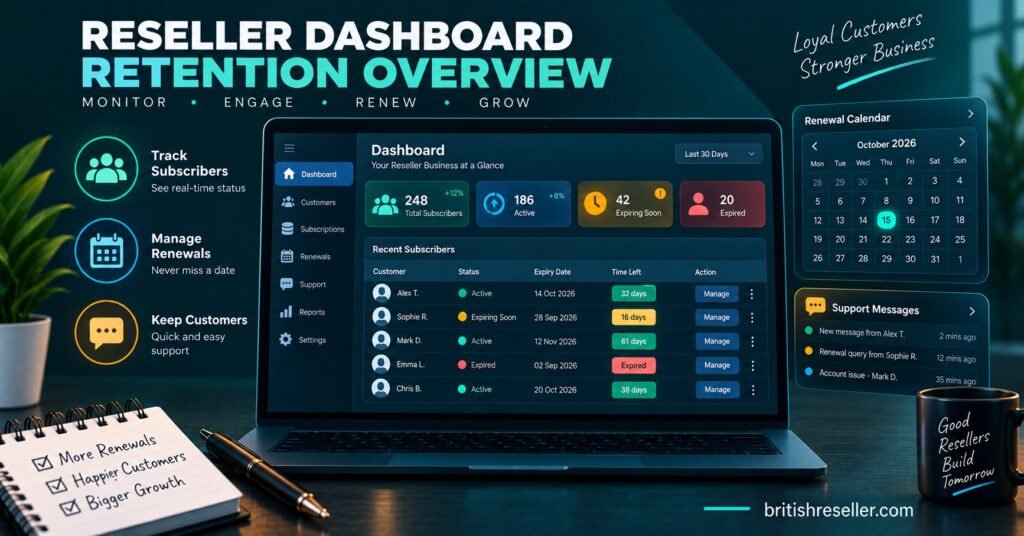
IPTV panel Resellers running a larger subscriber base sometimes find it useful to let new subscribers try the service properly before committing to a full package, since a subscriber who understands exactly what they’re getting from a demo is less likely to cancel after a confused first week. Getting the right package in place from the start, rather than switching subscribers between plans repeatedly, also reduces the friction that leads to churn. Reviewing the available credit packages periodically helps make sure pricing tiers still match what your actual subscriber base needs.
Reseller Retention Checklist
- Send setup instructions within minutes of activation, not hours later
- Set clear expectations about connections, catch-up limits, and content categories at signup
- Send renewal reminders three to five days ahead, with a short follow-up on the expiry date
- Offer a brief grace period before disconnecting a lapsed line
- Track subscribers with repeated support tickets as churn risks
- Reward long-term renewals with small perks instead of discounting the base price
- Review dashboard activity weekly rather than only when a subscriber complains
Common Questions on Retaining IPTV Subscribers
Does offering a discount actually improve retention?
Not usually on its own. Subscribers who stay because of a discount tend to leave the moment a cheaper option appears elsewhere. Subscribers who stay because the service worked reliably and support was responsive are harder to poach.
How quickly should a support message be answered to protect retention?
There’s no fixed rule, but the gap matters more than most resellers assume. A same-day reply, even a brief one acknowledging the issue, keeps a subscriber engaged far better than a fast but incomplete fix days later.
Is it worth contacting subscribers who never renewed after cancelling?
Sometimes, but only once, and only with something useful rather than a generic “come back” message. If the original complaint was about buffering or device issues, mention that it’s been addressed rather than just asking them to return.
Should every subscriber get the same retention treatment?
No. A subscriber who has renewed consistently for months represents a different risk and value profile than someone on their first month. Treating them identically wastes effort on low-risk accounts while under-serving the ones actually close to leaving.
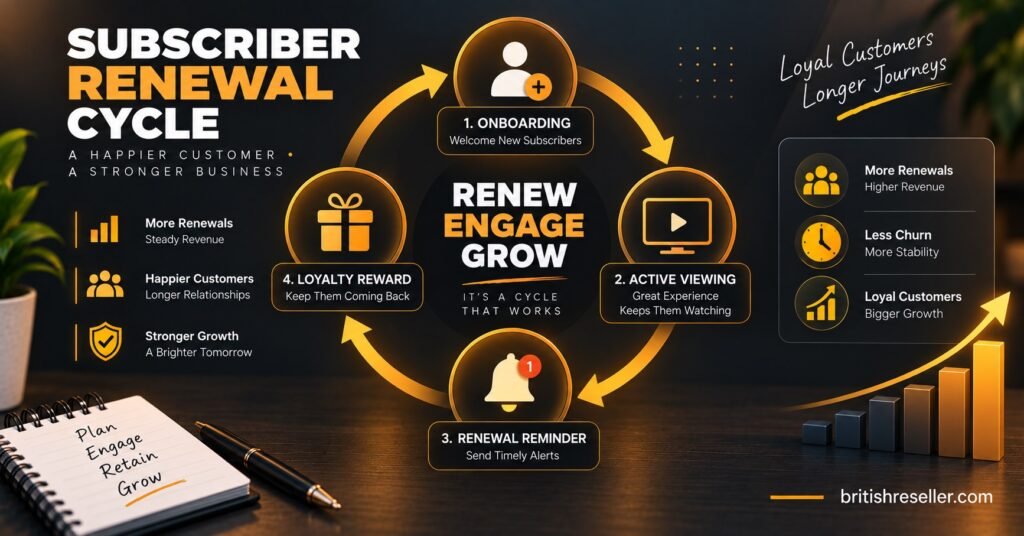
IPTV Customer Retention for UK panel Resellers isn’t a single tactic, it’s the sum of small habits: honest onboarding, timely renewal reminders, quick responses when something goes wrong, and pricing that rewards loyalty without training subscribers to expect discounts. None of it prevents every cancellation, and some subscribers will always leave for reasons outside your control. But resellers who build these habits into their routine consistently keep more of their subscriber base month over month than those who only react once a line has already gone quiet. Start with whichever gap looks weakest in your own process, whether that’s onboarding, renewal timing, or support speed, and build from there.