
IPTV Reseller vs Sub Reseller comes down to one thing: who holds the direct relationship with the panel provider, because that single fact decides who controls pricing, who carries the risk when a line stops working, and how much you can scale before you hit someone else’s ceiling.
Two Roles, One Product, Very Different Positions
Both a reseller and a sub reseller sell the same underlying service to end customers, and from a subscriber’s point of view the two look identical. The difference sits entirely behind the scenes, in who owns the account with the panel provider.
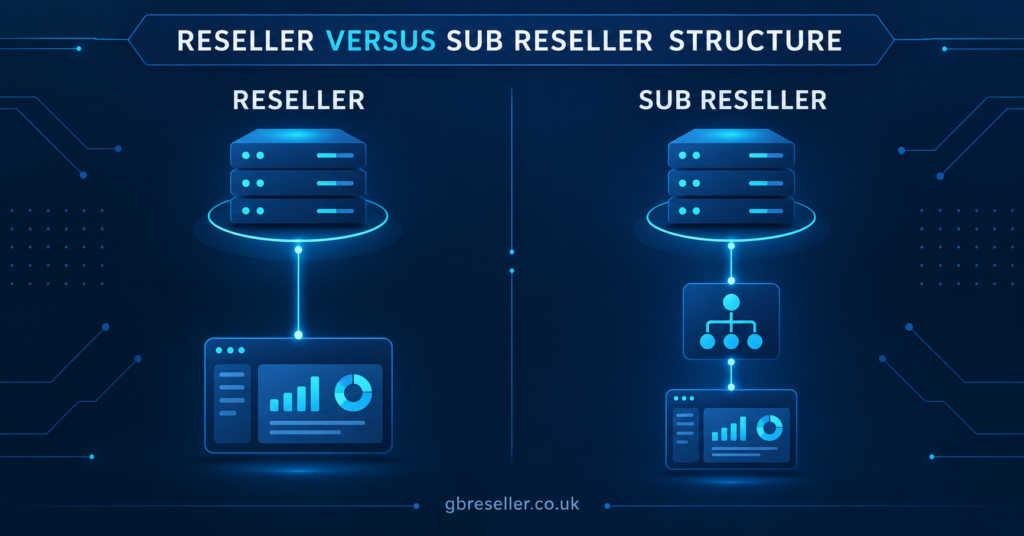
A reseller buys credits directly from the panel provider. They get their own branded dashboard, set their own prices, and deal with the provider’s support team when something goes wrong. A sub reseller does not buy from the provider at all. They buy a block of credits or a sub-panel from an existing IPTV Panel reseller, who then becomes their point of contact for everything, including problems the sub reseller did not cause.
That single layer of separation changes almost everything else about how the business runs day to day.
IPTV Reseller vs Sub Reseller: The Core Difference
At the reseller level, you are the customer of the panel provider. You negotiate pricing directly, you get first-hand notice of outages or changes, and your dashboard permissions are set by the provider itself. Nobody sits between you and the source.
At the sub reseller level, your parent reseller is the provider as far as you’re concerned. If they raise their prices, change their terms, or stop responding, you have no direct line to the panel provider to fall back on. You inherit whatever terms your parent reseller decides to pass down, and you have limited say in changing them.
This is not necessarily a disadvantage. For someone starting out with a handful of customers, a sub reseller position can be a sensible way to test the business without committing to a larger credits package or dealing with a provider directly. The trade-off is control, not necessarily quality of service.
Comparing the Two Positions
| Factor | Reseller | Sub Reseller |
|---|---|---|
| Relationship | Direct with panel provider | Direct with a parent reseller |
| Pricing control | Sets margins independently | Bound by parent reseller’s rates |
| Support access | Provider support team | Parent reseller only |
| Scaling ceiling | Set by credit packages available | Set by parent reseller’s own limits |
Pro tip: Before agreeing to a sub reseller arrangement, ask the parent reseller directly what happens to your customer base if they stop trading. A vague answer is itself an answer.
Where the Risk Actually Sits
The biggest practical difference is what happens when things go wrong. A reseller dealing with a server issue can escalate straight to the provider’s support channel, get a timeline, and pass that update to their own subscribers. A sub reseller has to wait on their parent reseller to escalate on their behalf, which adds a layer of delay and a layer of dependency on someone else’s responsiveness.
There’s also a business continuity question worth thinking through honestly. If a parent reseller closes their operation, changes provider, or simply stops answering messages, a sub reseller’s entire customer base is exposed with very little recourse. This is not a hypothetical worth dismissing. It is the single most common complaint raised by people who move from sub reseller status to full reseller status later on.
Pro tip: Keep your own records of every subscriber line you activate, including start dates and device details, even if your dashboard technically belongs to someone else. If you ever need to migrate customers, that record is what makes it possible.
Who Each Role Actually Suits
A white label IPTV reseller panel arrangement at the full reseller level tends to suit people who already have, or expect to build, a consistent customer base and want to brand the service as their own from day one. It suits anyone planning to treat this as an ongoing business rather than a side project, because the direct provider relationship pays off as volume grows.
A sub reseller position tends to suit people testing demand before investing in a larger credits commitment, or those who already have a trusted contact operating as a reseller and prefer to lean on that relationship rather than deal with a provider’s onboarding process from scratch. It can also suit someone managing a very small, informal group of customers where the added support layer rarely matters in practice.
Neither position is inherently better. The right one depends on how many subscribers you’re planning for, how much control over pricing and support you actually need, and how comfortable you are depending on someone else’s business decisions.
Questions Worth Asking Before You Commit
Anyone weighing an IPTV reseller provider UK option against a sub reseller offer should ask a few direct questions before handing over payment. What happens to existing subscribers if the arrangement ends. How quickly are technical issues actually resolved, not just acknowledged. Is pricing fixed for credits already purchased, or can it change retroactively. Can you see, in writing, what level of access and support comes with the tier you’re being offered.
A parent reseller who answers these clearly and without hesitation is generally trustworthy. One who deflects or gives vague reassurances is worth treating with caution, regardless of how professional their marketing looks.
Moving From Sub Reseller to Full Reseller
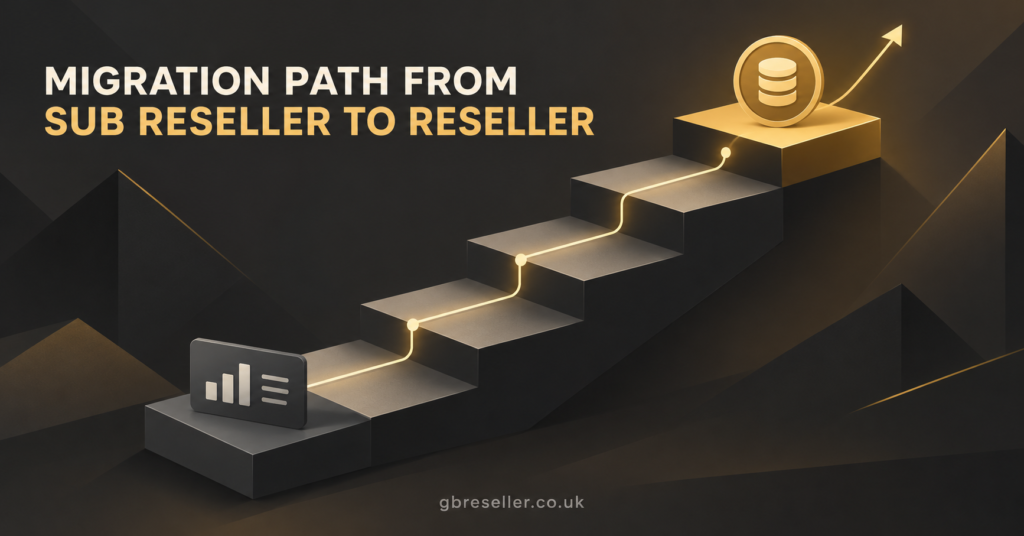
Plenty of people start as a sub reseller and move up once their subscriber numbers justify it. The transition usually means buying IPTV reseller credits directly from a provider for the first time, setting up your own branded dashboard, and gradually migrating existing customers across without disrupting their service.
This step is worth planning rather than rushing. Migrating too quickly, before you understand a provider’s dashboard and support process, can create more support tickets than it saves. A cleaner approach is to run both arrangements briefly in parallel, moving customers over in small batches while confirming each line works properly on the new panel first.
Pro tip: When migrating customers off a sub reseller panel, activate their new line before cancelling the old one, so there’s no gap in service that generates complaints.
Frequently Asked Questions
Does a sub reseller pay more per credit than a reseller?
Usually yes, because the parent reseller adds their own margin on top of what they paid the provider. The exact difference depends entirely on what that parent reseller charges.
Can a sub reseller get their own branded dashboard?
Some parent resellers offer a limited sub-panel with basic branding, but full dashboard control is typically reserved for direct resellers who buy credits from the provider.
Is it harder to get support as a sub reseller?
Not necessarily harder, but it is indirect. Every issue passes through the parent reseller first, which adds a step compared with contacting a provider’s support team directly.
Should a complete beginner start as a reseller or a sub reseller?
It depends on how many customers you expect in the first few months. A sub reseller position lowers the initial commitment, while going straight to reseller level suits anyone confident they’ll need volume quickly.
What happens to my customers if my parent reseller stops trading?
This varies by individual arrangement, which is exactly why it’s worth confirming in writing before committing. Some parent resellers offer a migration path, others do not.
Sub-Reseller Decision Checklist
- Confirm whether pricing on existing credits can change after purchase
- Ask what happens to your customer base if the parent reseller stops operating
- Get a clear answer on support response times, not just a promise of availability
- Keep independent records of subscriber activation dates and device types
- Check whether a path to becoming a full reseller exists if you outgrow the arrangement
Working out IPTV Reseller vs Sub Reseller isn’t really about which option sounds more professional. It’s about matching the level of control and risk you’re comfortable with to the size of business you’re actually planning to run. Start as a sub reseller if you want a lower-commitment way to test demand, but ask the hard questions first. Move to full reseller status once your subscriber numbers make direct control worth the extra responsibility, and treat that migration as something to plan carefully rather than rush.