
The most common IPTV reseller mistakes involve choosing a panel provider on price alone, skipping the trial period, overpromising reliability to subscribers, and mismanaging credits and margins. Most of these problems are avoidable if you slow down before your first purchase and treat reselling as an operation rather than a side hustle.
Why New Resellers Struggle in the First Few Months
Starting an IPTV reseller business looks simple from the outside. Buy a credits package, get a dashboard, start signing up subscribers. In practice, the first few months are where most resellers either build a stable base of customers or burn through goodwill they never get back.
The mistakes below are not exotic. They are ordinary decisions made under time pressure, usually because a new reseller wants to start earning quickly and skips a step that would have saved them later. Working through them one at a time gives you a clearer picture of what separates a reseller who lasts from one who quits within a year.
Mistake 1: Choosing a Panel Provider on Price Alone
The cheapest credits package is rarely the best long term decision. A low credit price can mean a provider is cutting costs somewhere, and that somewhere is usually server capacity, support staffing, or content maintenance.
Before committing, look past the headline price and ask what you actually get for it: server uptime figures the provider is willing to state clearly, how support requests are handled, and whether pricing has stayed stable for existing resellers. A provider that will not answer basic questions about its infrastructure before you have paid is unlikely to answer them after.
Pro tip: Ask a prospective provider how they handle server overload during major live events. Their answer tells you more about reliability than any marketing page.
Mistake 2: Skipping the Trial or Test Period
Buying a full credits package before testing a panel is one of the fastest ways to lose money as a new reseller. A short trial, even a small one, shows you how the dashboard behaves, how many devices a line supports, and whether the EPG and VOD library are actually maintained rather than just listed as a feature.
If a provider does not offer any way to test before a bulk purchase, treat that as a limitation to factor into your decision rather than an automatic disqualifier. Some legitimate providers simply structure their offering around small starter packages instead. GB Reseller Panels’ credit packages are one example of how starter tiers are typically structured, letting a new reseller test a small volume before scaling up.
Mistake 3: Overpromising Reliability to Subscribers
New resellers often repeat provider marketing language word for word when talking to subscribers, promising zero buffering or guaranteed uptime. No IPTV service, regardless of provider, can honestly guarantee uninterrupted streaming at all times. Internet conditions, device performance, and local network issues all affect what a subscriber experiences, and none of those are fully within a reseller’s control.
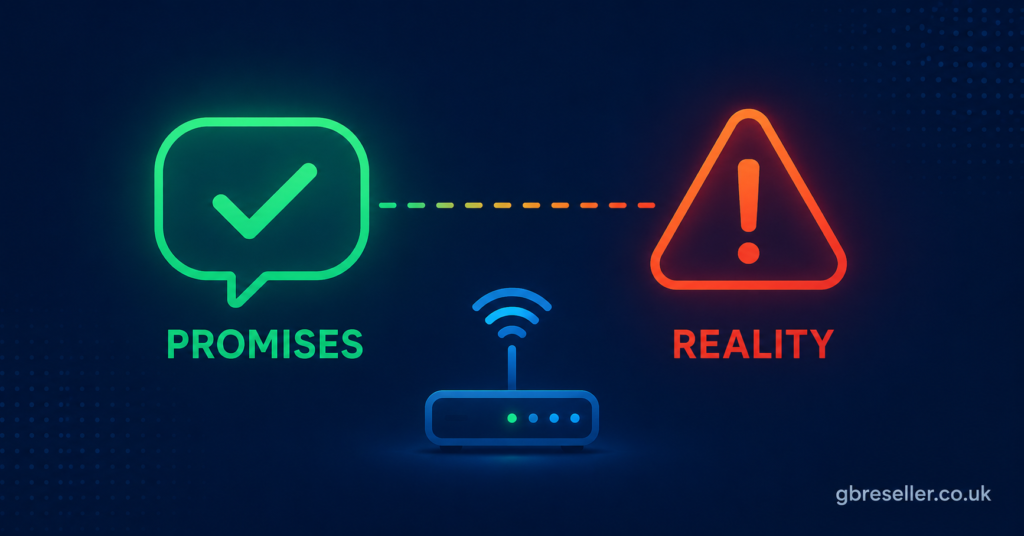
A more sustainable approach is setting honest expectations from the first conversation: what the service includes, what affects performance, and what steps you will take if something goes wrong. Subscribers who understand the basics of how streaming works are far less likely to churn after their first buffering incident.
Mistake 4: Poor Credit and Margin Management
Credits are the core unit of a reseller’s business, and treating them casually is a common early mistake. Buying credits without a clear pricing plan, activating lines below cost, or losing track of how many credits remain can quietly erode a margin that looked healthy on paper.
Working out your break-even price per subscriber before you activate a single line, and reviewing it periodically as your credit cost or subscriber base changes, keeps the business predictable rather than reactive.
Pro tip: Keep a simple spreadsheet of credits purchased, credits used, and revenue per subscriber. It takes minutes to update and prevents the slow margin leaks that are hardest to notice in the moment.
Mistake 5: Ignoring Refund Terms, Documentation, and Provider Transparency
New resellers frequently skip reading a provider’s refund policy, terms of service, or basic business information before purchasing. This matters because disputes happen, whether over a faulty line, a billing issue, or a service interruption, and having no clear terms to refer back to leaves both the reseller and the subscriber in a weak position.
| What to Check | Why It Matters |
|---|---|
| Refund and replacement terms | Determines what happens if a line stops working |
| Registered business details | Shows whether the provider is a real, accountable operation |
| Support response commitments | Sets realistic expectations for resolving issues |
Pro tip: Save a copy of the provider’s terms and refund policy when you sign up. Providers occasionally update these pages, and having the original version helps if a dispute arises later.
Mistake 6: Neglecting Customer Support and Communication
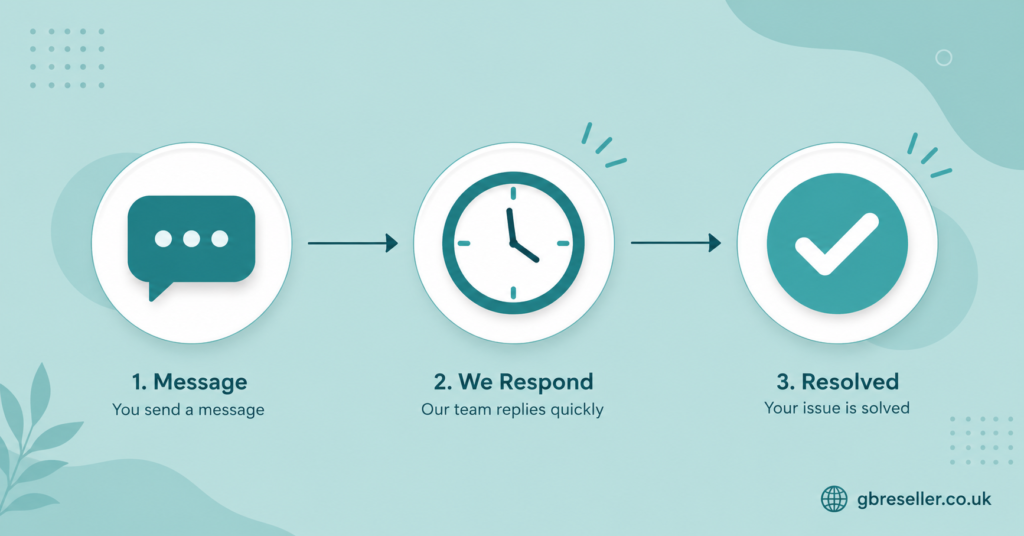
Many new resellers treat support as something to deal with only when a subscriber complains. By then, the subscriber has usually already decided whether to stay or leave. Slow replies, vague answers, and long silences during outages are among the fastest ways to lose subscribers who would otherwise have stayed.
Setting basic expectations early, such as typical response times and how you will communicate during a service issue, reduces the number of frustrated messages you receive and makes the ones that do come in easier to handle.
Mistake 7: Scaling Too Fast Without Checking Infrastructure or Support Capacity
Growth feels like validation, so it is tempting to keep buying larger credit packages as soon as subscriber numbers climb. The risk is scaling faster than your provider’s infrastructure or your own ability to support customers can handle. A panel that performs well with fifty active lines is not automatically stable at five hundred, and neither is a one-person reseller operation.
Before committing to a much larger credits tier, it is worth checking whether your provider has any published information about server capacity or load handling at higher volumes, and being honest with yourself about how much subscriber support you can realistically manage alone. Some resellers use this stage to bring on a sub-reseller to share the workload, which introduces its own set of responsibilities around permissions and customer ownership.
Sub-Resellers and Where They Fit Into This
If you are operating as a sub-reseller rather than a direct reseller, most of the same mistakes apply, with one added layer: dependency on a parent reseller’s decisions. Margins, support responsibility, and account permissions are usually set by the parent reseller, not the panel provider directly, which means clarity on those terms matters just as much as the provider relationship itself.
Is IPTV Reselling Legal?
IPTV is a delivery technology, not a content category. Whether a specific service is lawful depends on whether the underlying content is properly licensed and distributed, not on how professional the website or payment system looks. As a reseller, checking a provider’s transparency around business registration, terms, and content rights is a reasonable step, though it does not substitute for independent legal advice if you have specific concerns about your market or jurisdiction.
What a Trustworthy Panel Provider Usually Looks Like
There is no single feature that proves a provider is reliable, but a few signs tend to appear together in providers worth working with: clear registered business information, a documented refund process, responsive support before you have even paid, and pricing that does not change retroactively on credits you already own. British Reseller is one example of a provider presenting this kind of business information, though the same checks outlined above should be applied to any provider you are considering, including this one.
For resellers wanting a structured starting point, GB Reseller Panels’ guides section covers practical setup and troubleshooting topics that come up frequently once you have active subscribers.
Frequently Asked Questions
What is the biggest IPTV reseller mistakes new sellers make?
Choosing a provider based only on the lowest credit price, without checking support quality, refund terms, or infrastructure, tends to cause the most long-term problems.
How much should I charge subscribers as a new reseller?
Pricing varies by market and provider costs. A reasonable starting point is calculating your cost per credit, adding a margin that covers your time and support effort, then comparing that figure against typical local pricing before finalising it.
Do I need technical skills to become an IPTV reseller?
Most reseller dashboards are designed for non-technical use, so day-to-day operation does not usually require coding or server knowledge. Basic familiarity with how devices connect, such as M3U or Xtream Codes setup, is still useful for troubleshooting subscriber issues.
How many credits should a beginner buy?
Starting with a smaller package and testing performance before committing to a larger tier is generally safer than buying a large volume upfront, since it limits your exposure if the provider does not meet expectations.
What should I do if my provider has repeated downtime?
Document the outages, review your provider’s stated support and uptime commitments, and raise the issue directly. If the pattern continues, evaluating alternative providers is reasonable, since repeated downtime affects your subscriber relationships directly.
Can I be a reseller and a sub-reseller at the same time?
Some sellers do operate both roles, but it adds complexity around permissions, margins, and customer ownership. Keeping clear records of which subscribers belong to which arrangement helps avoid confusion later.
Conclusion
The IPTV Panel reseller mistakes covered here mostly come down to moving too fast in the early stages: picking a provider on price without checking the details, skipping a trial, overpromising to subscribers, and losing track of margins and support responsibilities as the business grows. None of these are complicated to fix once you know to look for them. The resellers who tend to last are the ones who treat the first few months as a testing period, keep clear records, and set honest expectations with subscribers from the start, rather than the ones who scale quickest.
Subscriber Checklist
- Confirm device compatibility before subscribing
- Ask about refund terms in writing before paying
- Clarify what support channels are available and typical response times
- Understand that no provider can guarantee uninterrupted streaming at all times
Reseller Checklist
- Test a provider with a small credits package before scaling up
- Calculate break-even pricing per subscriber before setting rates
- Keep a record of credits purchased, used, and remaining
- Save a copy of provider terms and refund policy at signup
- Set clear support response expectations with subscribers early
Sub-Reseller Checklist
- Clarify margin and pricing permissions with your parent reseller in writing
- Understand who is responsible for customer support in your arrangement
- Keep records of which subscribers and lines belong to your sub-account
- Know the limits of your dashboard permissions before promising features to customers