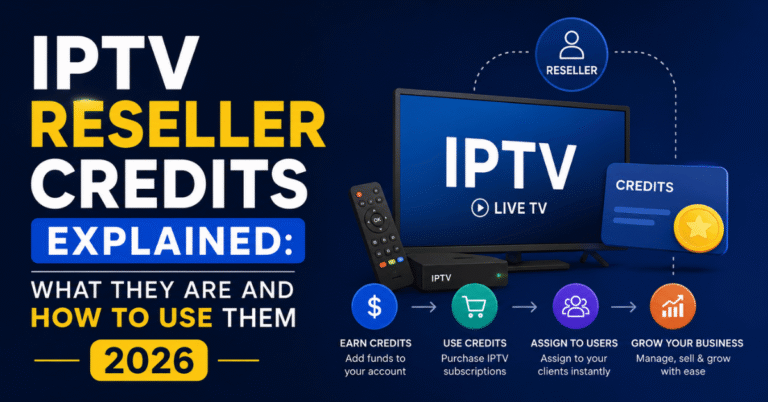


IPTV Reseller Credits UK packages are prepaid credit bundles that UK IPTV resellers buy upfront, then spend one credit at a time to activate individual subscriber lines on a panel. A credit doesn’t expire the moment you buy it, and it isn’t tied to a rolling monthly bill; it sits in your account until you choose to use it. That distinction matters more than most new resellers realise, because it changes how you price subscribers, plan stock, and compare providers against each other. This guide covers what a credit actually buys you, how many to start with, and the signs that separate a dependable credit provider from one that causes problems later.
How IPTV Reseller Credits UK Actually Work
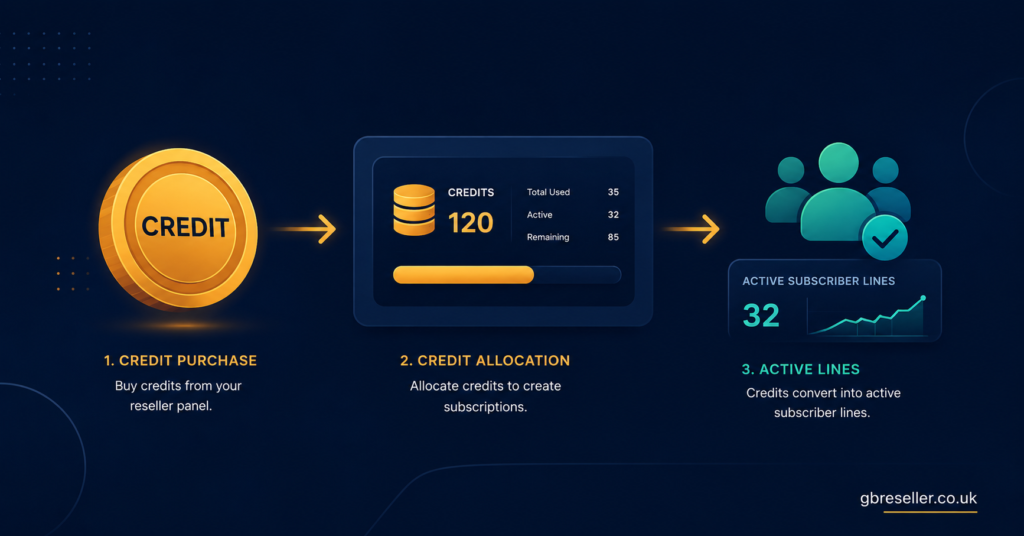
The mechanics are simpler than most explanations make them sound. You buy a batch of credits in advance, and each credit gets converted into one active subscriber line when you need it. There’s no separate invoice per customer and no waiting on the provider each time someone signs up. You create the line yourself through your dashboard, usually within seconds, and the credit is deducted at that point.
This is different from paying per subscriber on a rolling basis. Because the credits sit in your account rather than being billed monthly, you carry the stock risk yourself. If you buy 50 credits and only place 20 subscribers this month, the other 30 stay available rather than being wasted, provided the provider doesn’t impose an expiry window. That’s worth confirming before you commit to any package, since not every provider handles unused stock the same way.
What One Credit Buys You, and What It Doesn’t
A single credit typically buys one active subscriber account for a set period, most commonly a month, though the exact term varies between providers. It gives that subscriber access to the panel’s channel and VOD library, EPG data, and multi-device playback where the panel supports it.
What it doesn’t include is just as important. A credit doesn’t guarantee content quality, uptime, or how many screens a subscriber can use simultaneously; those depend entirely on the underlying panel and its infrastructure. It also doesn’t cover hardware, apps, or troubleshooting on the customer’s device. Treating a credit purely as “one month of access” rather than “one complete service” avoids a lot of confused expectations further down the line, both yours and your subscribers’.
Deciding How Many Credits to Start With
New resellers almost always ask the same question first: how many credits should I actually buy. The honest answer depends on how many subscribers you can realistically onboard in the first month or two, not on whatever volume happens to look like the best deal.
| Reseller Stage | Suggested Starting Volume | Reasoning |
|---|---|---|
| Testing the business | 25 to 30 credits | Enough to onboard a small first batch without a large upfront outlay |
| Building steady customers | 50 to 100 credits | Lower cost per credit while cash flow stays manageable |
| Established reseller | 100+ credits | Bulk pricing meaningfully reduces cost per subscriber at this volume |
Buying far more than you can place in the near term ties up money that could otherwise go toward marketing or support tools, and it does nothing for you if the credits sit unused for months. Buying too few, on the other hand, means paying the higher per credit rate repeatedly instead of stepping up to a better tier once demand is proven.
Pro tip: Start one tier below what feels ambitious, then move up once you’ve actually placed your first batch of subscribers and know your real conversion rate.
Pricing Patterns Worth Understanding
Credit pricing across UK panels generally follows a tiered structure: the cost per credit drops as the batch size increases. A package of 30 credits will usually cost more per credit than a package of 100, and some providers add bonus credits automatically once you cross a certain threshold rather than adjusting the headline price.
The mistake worth avoiding is comparing total package prices instead of the cost per credit. A larger package with a higher total price can still work out cheaper per subscriber than a smaller one, and the reverse is also true if a provider inflates the entry tier to make bulk packages look more generous by comparison. Working out the per credit figure yourself, rather than trusting the marketing framing, is the only reliable way to compare two providers fairly.
Pro tip: Ask for the exact per credit cost at every tier in writing before paying, not just the total price of the package you’re considering.
You can see how this tiered structure is usually laid out on a provider’s reseller credit packages, which makes the per credit comparison easier to do side by side.
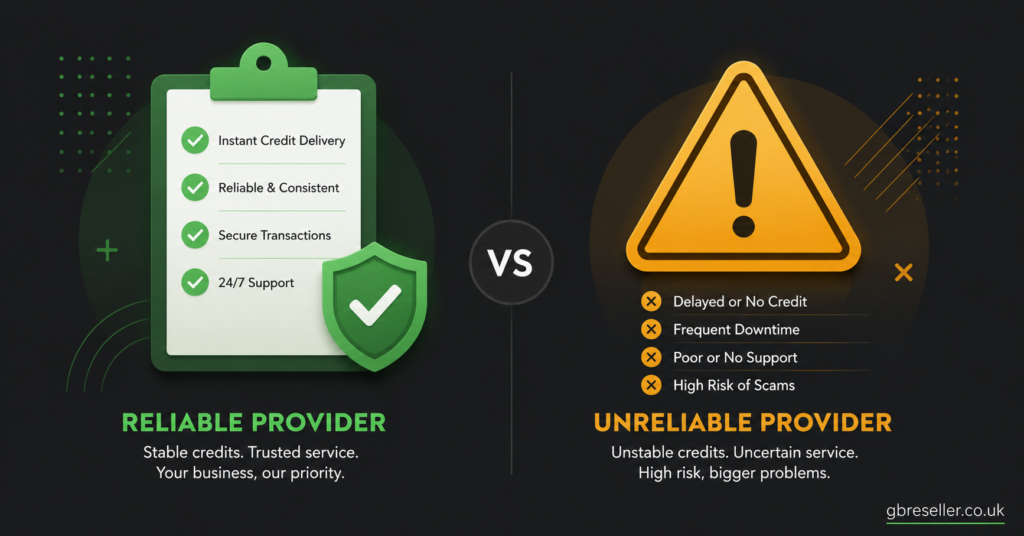
Signs a Credit Provider Won’t Hold Up Long Term
Some warning signs only become obvious after you’ve already paid, which is exactly why they’re worth checking beforehand.
- Prices on credits you’ve already purchased get changed retroactively, rather than only affecting new purchases going forward
- Refund or expiry terms are vague, inconsistent between pages, or simply not published anywhere
- Support response times stretch to a day or more, especially during evenings or peak viewing hours
- There’s no registered company name, address, or verifiable trading history behind the panel
None of these on their own is necessarily fatal, but two or more together usually point to a provider that will become a source of ongoing frustration rather than a stable supplier.
Signs a Provider Is Worth Sticking With
The opposite signals are just as telling, and they’re easy to check before you spend anything.
- Credits carry no forced expiry, or the expiry terms are clearly stated upfront
- The per credit cost is published transparently at every volume tier, not hidden behind “contact us for pricing”
- Support is answered by a real person who understands the dashboard, not a generic automated reply
- Company registration details are published and match what’s shown on invoices or payment pages
Sub-Reseller Credit Considerations
If you’re operating as a sub-reseller under someone else’s account rather than buying credits directly, your position carries an extra layer of dependency. Your credit stock, pricing, and even your ability to keep serving customers rely on the parent IPTV Panel reseller staying active and paying their own supplier on time.
Before agreeing to a sub-reseller arrangement, it’s worth understanding exactly what happens to your existing subscribers if the parent account is suspended or closed, and whether your margin is fixed or can be changed without notice. These aren’t questions that come up naturally in a sales conversation, so they’re worth raising directly.
Pro tip: Get the sub-reseller margin and any pricing conditions confirmed in writing rather than relying on a verbal agreement that can be revised later.
Common Credit Management Mistakes
A few habits cause more trouble than the credits themselves ever do. Buying a large batch before placing a single subscriber leaves money sitting idle for no reason. Not tracking which credit went to which subscriber, and when their renewal is due, leads to missed renewals and avoidable churn. And treating every subscriber’s activation date the same, rather than staggering renewals, creates a monthly scramble instead of a steady, manageable workflow.
Keeping a simple record, even a basic spreadsheet listing subscriber name, activation date, and renewal date, solves most of this without needing anything complicated. For newer resellers, working through a structured customer onboarding checklist alongside your credit tracking makes it far easier to catch renewal dates before they’re missed.
Frequently Asked Questions
Do IPTV reseller credits expire?
It depends entirely on the provider. Some credits never expire once purchased, while others carry a window after which unused credits are forfeited. This should be confirmed before buying, not assumed.
Can I get a refund on unused credits?
Refund policies vary widely and are often time limited, commonly covering a short window after purchase rather than indefinitely. Check the published refund terms rather than relying on what a sales message implies.
Is there a minimum number of credits I need to buy?
Most providers set a minimum package size, often somewhere around 25 to 30 credits, though this varies. There’s rarely a technical reason you couldn’t buy fewer; it’s usually a commercial minimum set by the provider.
What happens if my provider raises the price per credit later?
A reliable provider applies price changes only to new purchases, leaving credits you’ve already bought untouched. A provider that retroactively adjusts the value of credits you already paid for is a strong reason to look elsewhere.
Can one credit cover more than one device for the same subscriber?
This depends on the panel’s connection settings rather than the credit itself. Multi-connection support is a panel feature, so it’s worth confirming directly whether a single subscriber line supports simultaneous devices before promising that to a customer.
Conclusion
IPTV Reseller Panel Credits UK packages are, at their core, a simple prepaid system: buy a batch, spend one credit per subscriber activation, and repeat as your customer base grows. The part that actually determines whether the business runs smoothly isn’t the credit mechanic itself, it’s choosing a provider with transparent per credit pricing, clear expiry and refund terms, and support that responds when something goes wrong.
Start with a volume you can realistically place within the first month, track renewals properly from day one, and move up a tier only once your numbers justify it. Reviewing a provider’s published panel features and payment options alongside their credit pricing gives a fuller picture than looking at the credit cost in isolation.
IPTV Reseller Credit Buying Checklist
- Confirm whether credits expire, and if so, after how long
- Get the refund policy in writing, not just implied through a sales message
- Work out the per credit cost at each tier rather than comparing total package prices
- Check that the company has published registration details and a verifiable trading history
- Test support response times before committing to a large first purchase
- Start with a volume matched to your realistic first month of subscribers, not the biggest discount tier
- Set up a simple tracking method for activation and renewal dates before onboarding your first customer