

IPTV Reseller Credits: The Currency That Runs Your Entire Operation
Nobody tells you this when you first get into the reseller game, but IPTV reseller credits are the single point of failure that can either scale your business or strangle it overnight. Forget the panels, forget the playlists, forget your flashy storefront — if your credit management is broken, nothing else matters.
I’ve watched resellers with brilliant marketing collapse because they miscalculated their IPTV reseller credits burn rate during a football weekend. And I’ve seen quiet operators with modest followings build six-figure annual revenue simply because they understood the economics of credit allocation better than anyone else in their panel group.
This isn’t theory. This is how the business actually works.
What IPTV Reseller Credits Actually Represent Behind the Panel
Most newcomers think IPTV reseller credits are just a payment method — some kind of digital token you exchange for a subscription line. That understanding will cost you money.
Each credit is a unit of capacity tied directly to your provider’s server infrastructure. When you purchase IPTV reseller credits in bulk, you’re essentially pre-buying bandwidth allocation, CDN routing time, and database entries on someone else’s hardware. The provider has already committed resources the moment those credits land in your panel.
This is why providers don’t offer refunds on unused credits. It’s not greed. It’s infrastructure cost that’s already been absorbed upstream.
Pro Tip: Before purchasing any IPTV reseller credits, ask your provider whether credits expire. Some panels implement a 90-day expiry policy that silently drains your balance if you’re not activating lines fast enough.
The Pricing Trap That Catches Every New Reseller
Here’s a pattern that repeats itself constantly. A new reseller finds a provider offering IPTV reseller credits at rock-bottom rates — say £0.80 per credit when the market average sits around £1.50 to £2.00. They buy 500 credits, thinking they’ve found a goldmine.
Within three weeks, the streams start buffering. EPG data disappears. Customer complaints pile up. The provider goes silent. Those 500 credits? Gone.
The real cost of IPTV reseller credits is never the sticker price. It’s the cost per retained customer.
Consider this breakdown:
| Factor | Cheap Credits (£0.80) | Premium Credits (£2.00) |
|---|---|---|
| Average customer retention | 1.2 months | 5.8 months |
| Support tickets per customer | 8+ monthly | 1–2 monthly |
| Churn replacement cost | £4–6 per lost sub | £1–2 per lost sub |
| Effective cost per month served | £3.40 | £1.10 |
The maths doesn’t lie. Cheap IPTV reseller credits are the most expensive thing you’ll ever buy.
How Credit Tiers Work Across Different Panel Architectures
Not every panel handles IPTV reseller credits the same way, and this trips people up when they switch providers or run multiple panels simultaneously.
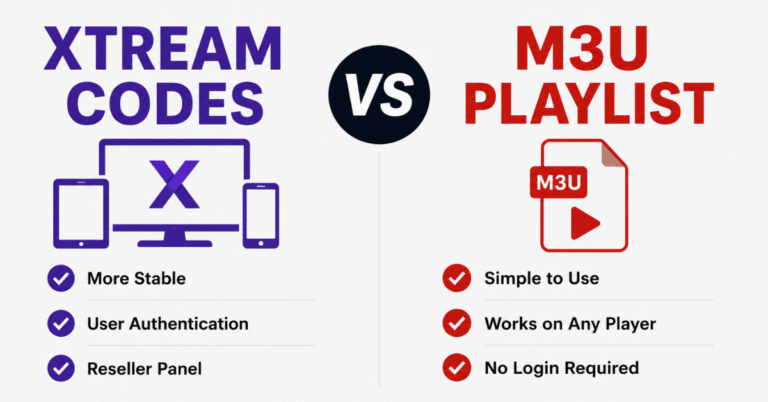
Xtream-based panels typically operate on a one-credit-per-line model. One credit activates one subscription for a fixed duration — usually one month. Bulk pricing kicks in at the 100, 250, or 500 credit thresholds, with the steepest discounts reserved for resellers buying 1,000 or more at once.
Ministra (Stalker) panels use a different logic entirely. Credits here often map to MAG device registrations, and the credit cost varies depending on the subscription tier your customer selects.
M3U-only setups sometimes bypass credits altogether, using direct payment-to-line generation. But this removes the reseller layer entirely, which means no margin control and no ability to set your own pricing.
Pro Tip: If you’re running IPTV reseller credits across two different panel types, maintain a separate spreadsheet tracking credit-to-revenue conversion for each. The margins are never identical, and blending them will mask losses on one side.
Why Bulk Credit Purchases Require Cash Flow Discipline
Buying IPTV reseller credits in large volumes is where real margin lives. A reseller purchasing 50 credits at a time might pay £2.00 each, while someone buying 1,000 pays £1.20. That £0.80 difference is pure profit per line — and across 1,000 activations, it’s £800 you either capture or leave on the table.
But here’s what kills underfunded resellers: tying up capital in credits you can’t move fast enough.
If your sales velocity is 40 lines per month and you buy 1,000 credits to get the best rate, you’ve just locked 25 months’ worth of inventory into a provider who might not exist in six months. Providers shut down, get seized, or pivot without warning. Your IPTV reseller credits don’t transfer to a new provider. They’re gone.
The smart play:
- Calculate your 60-day average sales velocity
- Buy credits to cover 75–90 days maximum
- Negotiate tier pricing with your provider based on consistent monthly volume rather than single bulk purchases
- Never hold more than 120 days of IPTV reseller credits with any single provider
Credit Allocation Strategy for Multi-Package Storefronts
Running multiple subscription packages — one-month, three-month, six-month, twelve-month — changes how you should think about IPTV reseller credits entirely.
A one-month package using a single credit generates immediate revenue but creates churn pressure every 30 days. A twelve-month package might consume one credit but locks in revenue for a full year. The credit cost is identical, but the business outcome is completely different.
Sophisticated resellers incentivise longer packages specifically because it reduces credit turnover. Fewer activations per year means fewer support interactions, fewer renewal reminders, and fewer opportunities for the customer to reconsider.
Pro Tip: Structure your pricing so that the 12-month package is less than 8x the monthly price. This nudge pushes customers toward annual commitments, which means your IPTV reseller credits generate more revenue per unit consumed.
Server Load and How It Connects to Your Credit Value
Here’s something that most guides about IPTV reseller credits completely ignore — the relationship between server infrastructure and credit value.
Your credits are only as reliable as the servers they activate lines on. If your provider runs overloaded servers with no load balancing, every credit you spend creates a subscription that will buffer during peak hours. That buffering generates complaints. Those complaints generate refund requests. Those refunds destroy your margin.
Critical infrastructure questions to ask before buying IPTV reseller credits:
- Does the provider use geo-distributed CDN nodes or a single data centre?
- Is there automatic failover if the primary uplink drops?
- What’s the concurrent connection limit per server?
- Are backup uplink servers in place for major sporting events?
A provider with proper load balancing and HLS latency optimisation under 2 seconds is worth paying double for. Your IPTV reseller credits on that infrastructure will produce customers who stay for months instead of demanding refunds after one weekend.
ISP Blocking in 2026 and the Hidden Credit Drain
The enforcement landscape has shifted dramatically. AI-driven ISP blocking is no longer experimental — it’s standard practice across major UK and European internet service providers. Deep packet inspection now identifies IPTV traffic patterns in real time, and DNS poisoning techniques have become more targeted.
What does this mean for IPTV reseller credits? It means a percentage of your activated lines will stop working through no fault of your own infrastructure. The customer’s ISP blocks the stream, the customer blames you, and you either burn another credit issuing a replacement line with a different server route or lose the customer entirely.
Mitigation strategies that protect your IPTV reseller credits from ISP-related losses:
- Ensure your provider rotates server IPs regularly
- Offer customers a setup guide that includes DNS configuration (Cloudflare, Google DNS)
- Provide VPN recommendations as standard onboarding material
- Choose providers whose infrastructure adapts to blocking patterns automatically
Each credit you lose to ISP blocking is margin erosion. Treating it as a cost of business without actively mitigating it is how resellers bleed out slowly.
Panel Management Mistakes That Waste IPTV Reseller Credits
Credits disappear faster than you’d expect when panel hygiene is poor. Here are the operational errors I see constantly:
Accidental duplicate activations. A customer submits their MAC address or device ID twice with slightly different formatting. The reseller doesn’t catch it and burns two IPTV reseller credits on what should have been one line. Across a month, this adds up.
Trial abuse without controls. Offering free trials is solid sales strategy, but if you’re spending IPTV reseller credits on trial lines without limiting duration, tracking conversion rates, or blacklisting serial trial abusers, you’re subsidising people who will never pay.
Failed activations not credited back. Some panels deduct credits on activation attempt, not on successful activation. If the line fails to generate properly, the credit is still consumed. Check whether your provider’s system handles this — many don’t.
Pro Tip: Run a weekly audit of your panel’s activation logs against your credit balance. Any discrepancy over 2% signals a systemic issue — either duplicate entries, failed activations eating credits, or a panel bug your provider hasn’t disclosed.
Scaling From 100 to 1,000 Customers Without Drowning in Credit Logistics
The jump from hobby reseller to serious operation usually happens between 100 and 300 active subscribers. This is precisely where IPTV reseller credits become a logistics challenge rather than a simple purchase.
At 100 subscribers, you can manage renewals manually. At 500, you can’t. At 1,000, manual renewal tracking will consume every waking hour.
Scaling your IPTV reseller credits operation requires:
- Automated renewal reminders sent 7 days and 2 days before expiry
- A tracking system (even a spreadsheet) matching each credit spent to a customer ID, activation date, and expiry date
- Pre-negotiated credit pricing locked in with your provider for at least 90 days
- A secondary provider relationship as insurance — never be dependent on a single source of IPTV reseller credits
The resellers who collapse at scale almost always do so because they couldn’t operationalise their credit management. The product was fine. The marketing was fine. The back office killed them.
Customer Churn and the True Cost Per Credit
A credit spent on a customer who stays 12 months costs you effectively nothing — the revenue covers it many times over. A credit spent on a customer who leaves after two weeks is a dead loss plus the acquisition cost that brought them in.
Churn reduction is, fundamentally, credit conservation. Every strategy you deploy to keep subscribers active — responsive support, stable streams, clear setup guides, proactive communication before renewal — is a strategy that increases the return on each IPTV reseller credits purchase.
The industry average churn rate sits somewhere around 30–40% monthly for budget resellers. Premium-positioned resellers with solid infrastructure report 10–15%. That gap represents a massive difference in credit efficiency.
| Monthly Churn Rate | Credits Used Per Year (100 subs target) | Effective Cost at £1.50/Credit |
|---|---|---|
| 40% | ~1,680 credits | £2,520 |
| 15% | ~1,200 credits | £1,800 |
| Savings | 480 credits | £720 annually |
Those 480 saved IPTV reseller credits represent pure margin. And that’s at just 100 subscribers.
Frequently Asked Questions
How many IPTV reseller credits do I need to start a reseller business?
Most providers set a minimum first purchase between 25 and 50 IPTV reseller credits. However, starting with at least 100 credits gives you better per-unit pricing and enough inventory to handle your first wave of customers without running out mid-promotion. Budget between £150 and £250 for an initial credit purchase depending on provider tier.
Do IPTV reseller credits expire if I don’t use them?
It depends entirely on the provider. Some panels allow indefinite credit holding, while others enforce 60 to 120-day expiry windows. Always confirm the expiry policy in writing before purchasing. Losing credits to silent expiry is one of the most common and avoidable losses new resellers face.
Can I transfer IPTV reseller credits between different providers?
No. IPTV reseller credits are locked to the specific panel and provider where they were purchased. There is no cross-platform credit system. This is why diversifying across multiple providers requires maintaining separate credit balances and tracking each independently.
What happens to my credits if my IPTV provider shuts down?
They’re lost. There is no recovery mechanism, no escrow, and no refund process. This risk is why experienced resellers never hold more than 90 days of inventory in IPTV reseller credits with any single provider. Spreading your purchases across trusted providers reduces catastrophic loss exposure.
Is it better to buy IPTV reseller credits monthly or in bulk?
Bulk purchases offer significantly better pricing — sometimes 30 to 40 percent cheaper per credit. But only buy in bulk if your monthly sales velocity justifies it. Purchasing 1,000 credits when you sell 30 lines per month creates dangerous capital lock-up with a provider who may not be around long enough for you to use them all.
How do I calculate my profit margin per IPTV reseller credit?
Subtract your credit cost from your subscription selling price, then factor in your average customer lifespan. If a credit costs £1.50 and you sell a monthly subscription at £8, your gross margin is £6.50 per activation. Multiply by average retention months to get lifetime credit value — that number drives every pricing and purchasing decision.
Why do some panels charge different credit amounts for the same subscription length?
Panel architecture varies. Some panels charge one credit per month regardless of package, while others charge a flat one credit per activation whether the subscription runs one month or twelve. Always clarify the credit-per-package structure before committing — it fundamentally changes your unit economics.
Can I offer free trials without spending IPTV reseller credits?
Some providers offer a separate trial system that doesn’t consume reseller credits, typically limited to 24-hour access. Others require you to spend a full credit on every trial. If your provider uses credit-based trials, limit trial duration aggressively and track conversion rates — anything below 20 percent trial-to-paid conversion means your trial strategy is burning credits without return.
Your IPTV Reseller Credits Execution Checklist
- Audit your current credit expiry policy with every provider you use — confirm in writing
- Calculate your 60-day sales velocity and cap credit purchases at 90 days of inventory
- Build a credit-to-customer tracking sheet linking every activation to a subscriber ID and expiry date
- Run a weekly panel audit comparing credit balance against activation logs to catch leakage
- Negotiate volume pricing based on consistent monthly commitment, not one-off bulk buys
- Set up automated renewal reminders at 7-day and 2-day intervals to reduce involuntary churn
- Establish a relationship with at least one backup provider so you’re never locked into a single credit source
- Review your trial-to-paid conversion rate monthly — kill any trial programme converting below 20%
- Implement DNS configuration guides in your customer onboarding to reduce ISP blocking complaints
- Visit British Reseller for trusted IPTV reseller panel options with transparent credit pricing