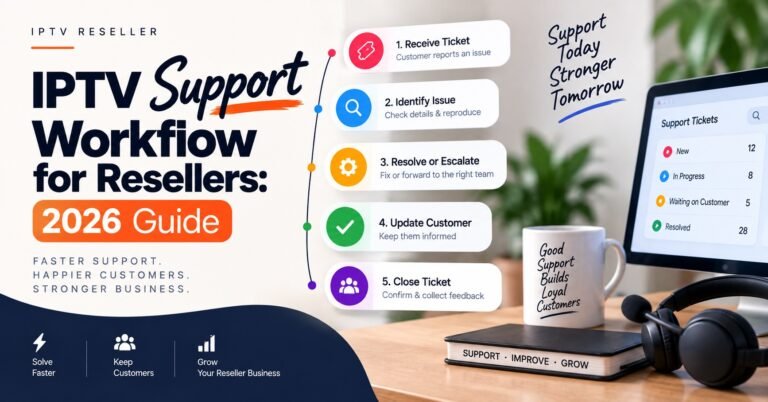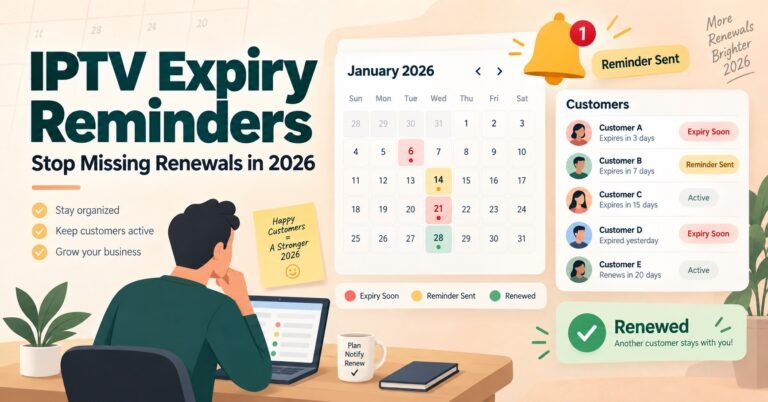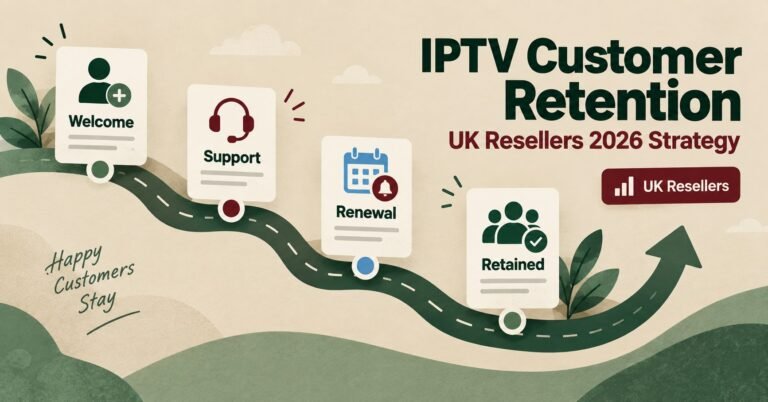
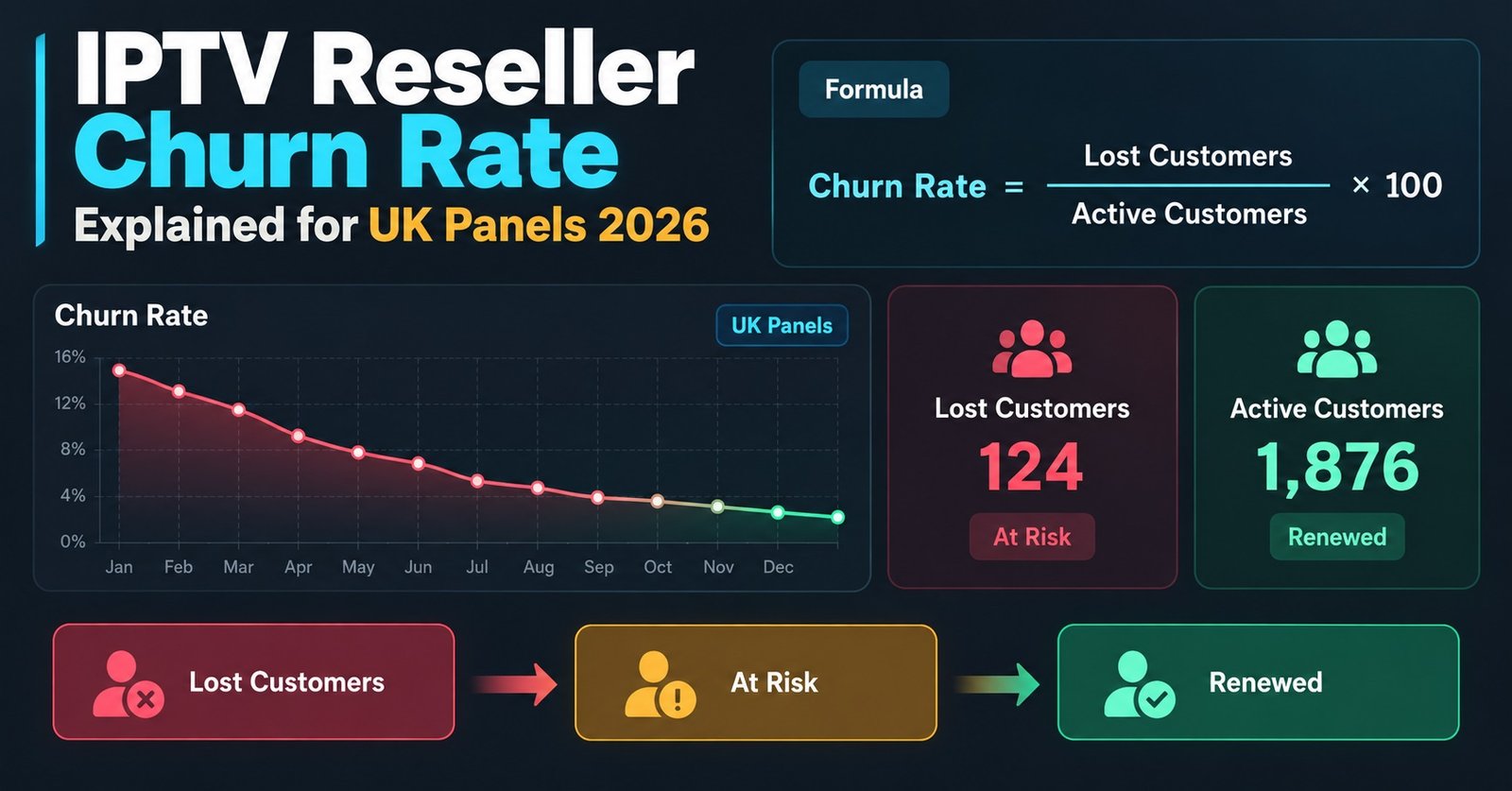

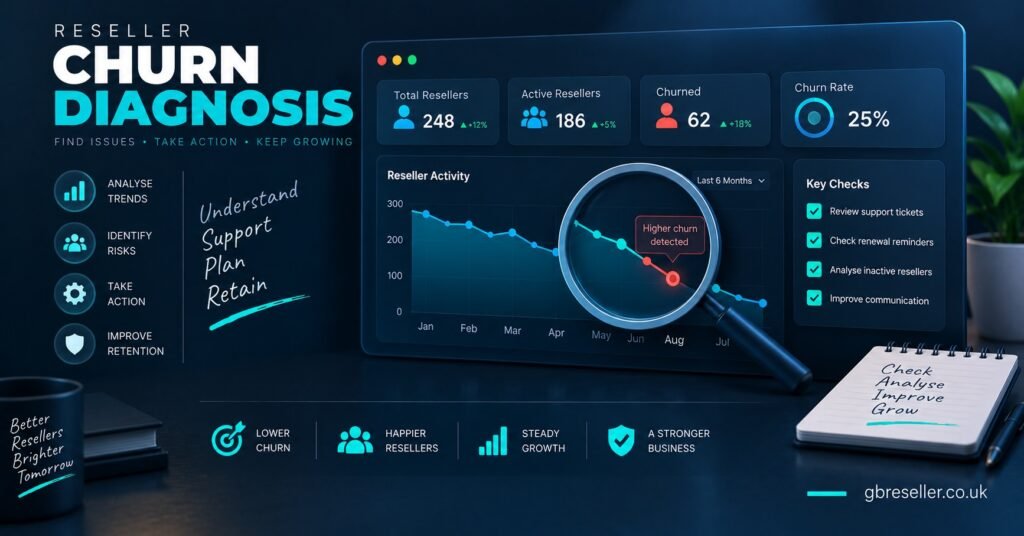
Your IPTV Reseller Churn Rate is the percentage of active subscriber lines that cancel, lapse, or fail to renew within a set period, and it is one of the clearest signals of whether a reseller business is actually holding onto the customers it wins. A reseller can sell forty new lines in a month and still shrink if thirty-five existing customers quietly drop off in the same window. Most IPTV Panel resellers track sales closely but never sit down and calculate this number, which means problems in support, pricing, or panel reliability often go unnoticed until the subscriber count has already fallen.
What Counts as Churn in an IPTV Reseller Business
Churn is not the same as a single cancellation. It is the rate at which subscribers leave over a defined period, expressed as a percentage of the total you started with. If you began the month with 100 active lines and lost 8, your monthly churn for that period is 8 percent, regardless of how many new lines you sold in the same window.
Two things get confused here often. The first is mixing gross churn with net churn. Gross churn counts only the losses. Net churn subtracts new sign-ups from the losses, which can hide a genuine retention problem behind healthy new sales. The second is counting trial users as churn when they were never converted to a paying line in the first place. A fair churn figure only includes subscribers who were active, paying customers before they left.
Calculating Your IPTV Reseller Churn Rate
The basic formula is straightforward: divide the number of subscribers lost during a period by the number of active subscribers at the start of that period, then multiply by 100. A reseller running 60 subscriber lines who loses 5 in a month has a monthly churn rate just above 8 percent for that period.
The period you choose matters more than resellers usually assume. Monthly IPTV subscriptions naturally show a different churn pattern to quarterly or annual ones, because a monthly customer has twelve decision points a year to leave, while an annual customer only has one. Comparing your churn rate against a business running mostly annual plans will give you a misleading picture, so track it against your own historical numbers rather than assuming a fixed benchmark applies to every panel setup.
Where the Losses Actually Start
Churn rarely has one cause. It usually builds from a handful of recurring issues that compound over a few billing cycles. The table below covers the ones that show up most often in IPTV panel reseller support conversations.
| Warning sign | Likely cause |
|---|---|
| Repeated buffering complaints on the same devices | Server load or routing issues at the provider level |
| Subscribers asking for refunds within the first week | Onboarding gap or unclear device setup guidance |
| Renewal reminders going unanswered | Pricing mismatch with perceived value, or forgotten renewal dates |
| Sudden drop-off after a channel list update | Missing content the subscriber specifically wanted |
| Long gaps between support replies and resolution | Support capacity not scaling with subscriber count |
Not every cause is within a reseller’s control. Panel-level reliability sits with whoever supplies the credits and infrastructure, which is one reason resellers evaluate providers like those covered on how to pick the best IPTV reseller panel in the UK before committing to a supply relationship long term.
Fixing the Leaks That Are Actually Yours to Fix
Some churn drivers sit entirely with the reseller rather than the panel provider, and these are usually the fastest to correct once identified.
Onboarding is the first place to look. A subscriber who struggles to get their device working in the first 48 hours rarely gives a second chance, even if the underlying service is solid. A short setup guide sent immediately after payment, with device-specific instructions rather than a generic PDF, removes a large share of early cancellations before they happen.
Pro tip: Send setup instructions matched to the subscriber’s stated device, not a one-size-fits-all guide covering every platform at once.
Renewal friction is the second common leak. Subscribers who have to actively remember to pay again, with no reminder, will forget more often than resellers expect. A simple reminder message two or three days before expiry, sent through whichever channel the subscriber originally used to buy, recovers renewals that would otherwise silently lapse.
Pricing without context also drives churn that looks unrelated to price on the surface. A subscriber who does not understand what they are paying for compares the bill to a free alternative and leaves. Being clear about what the subscription includes, rather than just the monthly figure, gives the price something to justify itself against.
Pro tip: Review your own churn numbers separately for new subscribers under 60 days and established subscribers over six months. The causes behind each group are usually different, and a single blanket fix rarely works on both.
When Churn Signals a Provider Problem, Not a Marketing Problem
If churn spikes across your whole subscriber base at the same time, especially after a specific date, the cause is more likely sitting upstream with your credit or panel supplier rather than with your own sales or support. Server outages, channel list changes, or EPG failures tend to produce this exact pattern, a cluster of cancellations tied to one event rather than a slow drift.
This is the point where resellers should ask direct questions of their supplier rather than absorbing the losses quietly. What does support response time actually look like during an outage. Is infrastructure owned directly or resold from a third party several layers removed. Are credit prices locked at purchase or subject to change after the fact. GB Reseller Panels sets out its own approach to these questions on its pricing page and about page, and any reseller comparing suppliers should expect similarly direct answers rather than vague reassurance.
Building Retention Into the Business, Not Just the Support Desk
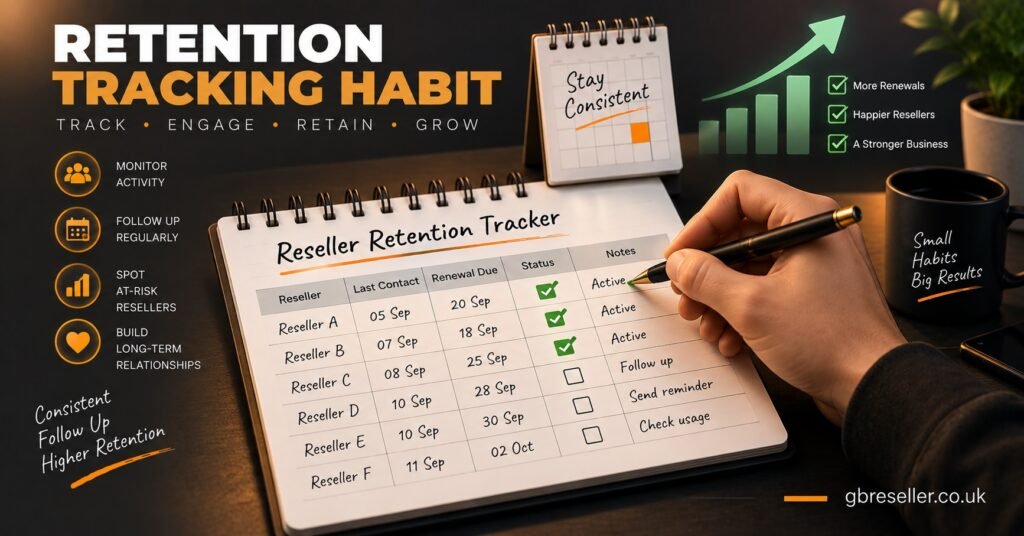
Reducing churn works better as an ongoing habit than a one-off fix. Resellers who check their numbers monthly catch problems while they are still small, rather than after a quarter of unexplained shrinkage. A simple spreadsheet tracking active lines, cancellations, and renewal dates is enough for most reseller operations, no dedicated software required.
Sub-resellers add a second layer worth watching separately. A sub-reseller’s own churn affects your credit consumption and your reputation even though you never speak to their end subscribers directly. Asking sub-resellers to report basic retention figures, even informally, gives visibility into a part of the business that otherwise stays hidden until credit orders unexpectedly drop.
Support responsiveness deserves its own line item too. Subscribers rarely cancel the moment something breaks. They cancel after asking for help and waiting too long for an answer. If you can reach a provider’s support team quickly, as described on GB Reseller Panels’ contact page, that speed becomes something you can pass on to your own subscribers rather than a bottleneck you inherit.
Pro tip: Keep a short log of every cancellation with a one-line reason. After a few months, patterns appear that a raw churn percentage alone will not show you.
Frequently Asked Questions
What counts as a churned subscriber in an IPTV reseller business?
A subscriber who was active and paying, then cancels or fails to renew, counts as churn. A trial user who never converts to a paid line should not be included, since they were never a retained customer to begin with.
Does a high churn rate always mean the provider is at fault?
Not always. Isolated cancellations spread over time usually trace back to onboarding, pricing clarity, or support speed on the reseller’s side. A sudden spike affecting many subscribers at once, tied to a specific date, more often points to a panel-level issue such as an outage or content change.
How often should I calculate my churn rate?
Monthly is usually enough to catch problems early without over-analyzing normal fluctuation. Resellers running mostly annual subscriptions may find a quarterly review more meaningful, since monthly numbers will look artificially low most of the year.
Can free trials distort my churn numbers?
Yes, if trial users are counted as subscribers who left when they simply never converted. Keep trial conversion and paid subscriber churn as two separate figures to avoid one masking the other.
Is there an industry-standard churn rate I should aim for?
There is no single figure that applies fairly across every IPTV reseller, since billing cycles, market, and subscriber base size all affect the number. Tracking your own churn against your own history over time is more useful than comparing against an unverified industry average.
Reducing your IPTV Reseller Churn Rate comes down to catching losses early, separating causes you control from causes sitting with your supplier, and treating retention as something to measure monthly rather than notice only after subscriber numbers have already dropped. Start by calculating your current figure honestly, log the reason behind every cancellation for a few months, and use that pattern to decide whether the next fix belongs in your onboarding process or in a conversation with your panel provider.
Reseller Churn Reduction Checklist
- Calculate churn monthly using active lines lost against active lines at the start of the period
- Separate gross churn from net churn so new sales do not hide a retention problem
- Log a one-line cancellation reason for every lost subscriber
- Send device-specific setup instructions immediately after payment
- Send renewal reminders two to three days before expiry
- Track sub-reseller churn separately from direct subscriber churn
- Watch for churn spikes tied to a single date, which usually point to a provider-side issue
- Review support response times as a retention factor, not just a service metric