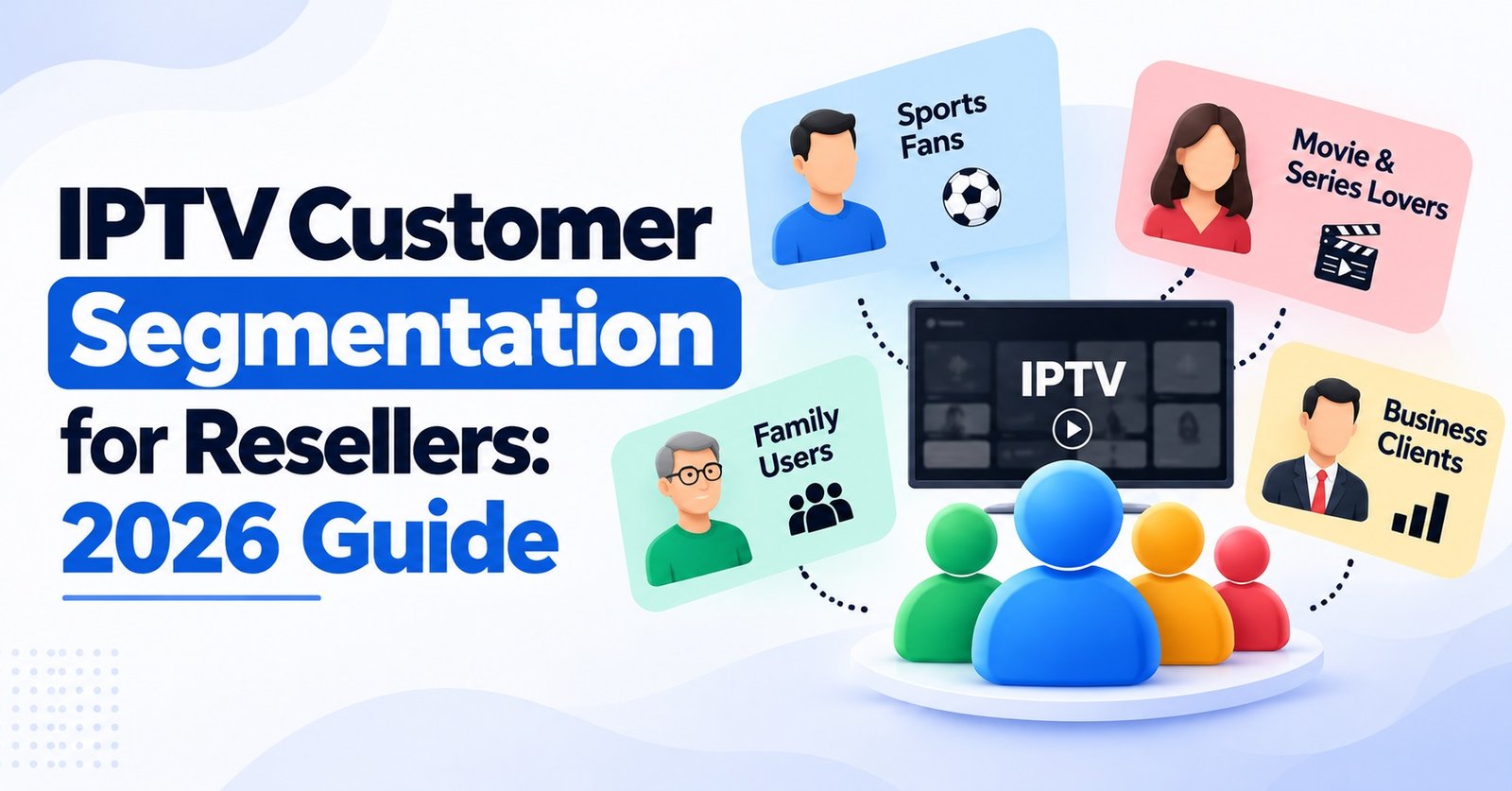

IPTV Customer Segmentation for Resellers means sorting your subscriber lines into groups that behave differently, then handling each group differently when it comes to renewals, support, plan length and pricing. Instead of treating every customer as one line on a panel, you look at who renews on time, who needs help every month, who runs several devices in one household and who only ever buys a single month. Those groups need different messages and different amounts of your time.
Most IPTV panel resellers already have the raw material for this and never use it. Your reseller dashboard holds creation dates, expiry dates, package lengths, connection counts and, if you keep them, notes on devices and support contacts. The first thing to check is not a clever marketing tool. It is whether your records are consistent enough to sort. If half your lines have no notes and the other half have notes written three different ways, fix that before you try to group anyone.
Start With Behaviour, Not Demographics
The instinct many new resellers have is to segment by who the customer is: age, location, whether they found you through a friend or a social post. Some of that is useful, but it rarely changes what you actually do on a Tuesday afternoon when a batch of lines is about to expire.
Behaviour tells you far more. A customer who has renewed four times without a reminder is a different business proposition from one who lapsed twice and came back after a discount. A household running several connections on mixed devices generates a different support pattern from a single user on one smart TV. None of this requires you to know anything personal about the subscriber. It comes from how they use the service and how they pay for it.
This matters for a practical reason. Demographic segments tend to produce vague actions (“target younger users”), while behavioural segments produce specific ones (“send the three-stage renewal reminder to monthly customers who have lapsed before”).
The Segments Your Panel Already Shows You
You do not need specialist software to build useful groups. Most of the segments below can be pulled from panel data plus a simple spreadsheet or customer notes system.
Renewal rhythm
Split customers into those who renew before expiry, those who renew after a reminder, and those who let the line lapse and return later. The third group is where silent churn hides. They are not necessarily unhappy; many simply forget. But they are also the group most likely to try another provider during the gap.
Plan length
Monthly, quarterly, six-month and annual customers behave differently. Longer plans reduce renewal admin and usually settle cash flow, which is why many resellers push them. The trade-off is that a problem on a long plan can sit unresolved for months if nobody checks in, and a disappointed annual customer tends to leave for good rather than quietly renewing.
Device and setup type
Group lines by the main device used: smart TVs, streaming sticks, Android boxes, MAG-style set-top boxes, phones and computers. This is one of the most useful operational segments because support problems cluster by device. When one app update causes trouble on one platform, you want to know exactly which customers to contact rather than messaging everyone.
Connection count and household size
Single-connection users and multi-connection households are not the same customer. Multi-connection accounts often mean several people depending on the service, which raises the stakes when something breaks during a busy evening. They also tend to produce more “it works on one screen but not the other” questions.
Support load
Track how often each customer contacts you. A small number of accounts usually generate a disproportionate share of messages. That is not a reason to drop them, but it is a reason to understand why. Repeated contacts often point to a poor first setup, an ageing device or a weak home connection rather than a difficult person.
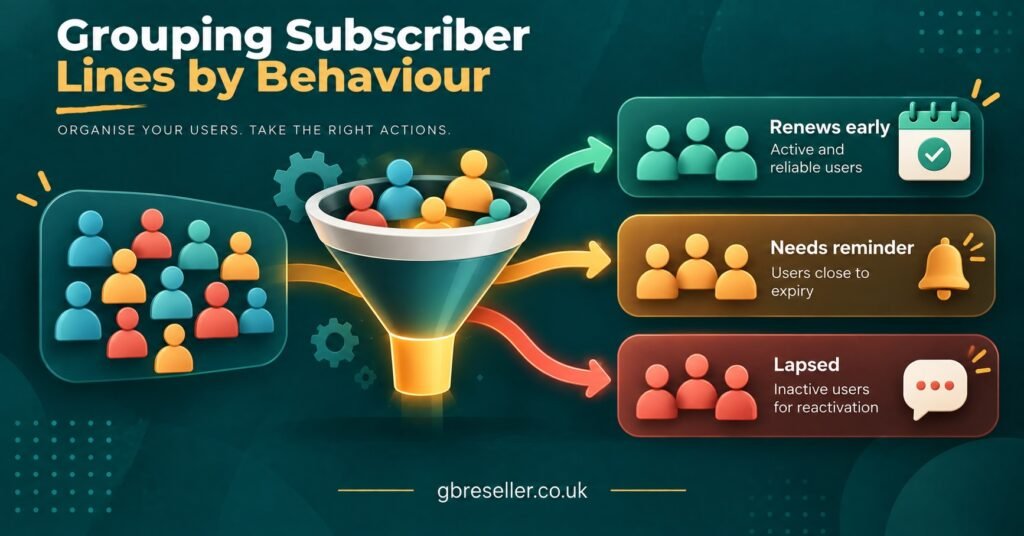
How IPTV Customer Segmentation for Resellers Works in Practice
The workable version is simple and repeatable. Anything more elaborate usually gets abandoned after a few weeks.
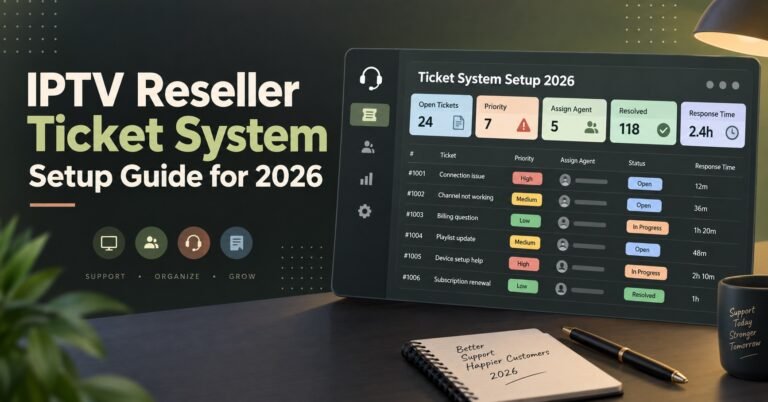
Start by exporting or listing every active and recently expired line with the fields you trust: username or reference, start date, expiry date, package length and connection count. Then add three columns you control yourself: main device, renewal behaviour and support contacts in the last three months. Keep the wording fixed. “Smart TV” and “TV” and “Samsung” as three separate entries will ruin any attempt to filter later.
Once the data is tidy, assign each customer a short tag combination. Something like “Monthly / reminder-renewer / stick / 1 connection” is enough. You are not building a data science project. You are giving yourself a way to answer questions such as “which customers on quarterly plans have lapsed before?” in a few seconds.
Review the tags monthly, ideally in the week before your largest expiry batch. Customers move between segments. A monthly buyer who renews early three times in a row is a sensible candidate for a longer plan offer. A long-standing customer who suddenly contacts support twice in one week has moved into an at-risk group, whatever their history.
Pro tip: Record the date and reason for every support contact in the same place as the customer’s tags, even if the note is only a few words. After a couple of months, the support column becomes your most reliable early warning of churn.
Your panel choice affects how painful this is. Dashboards that show clear expiry lists, let you add notes to lines and make package lengths easy to read save hours every month, which is one of the features worth checking in a IPTV reseller panel before you commit credits.
Treating Each Group Differently
Segmentation is only worth the effort if it changes what you do. The table below shows how the main groups usually differ in what they need.
| Segment | What they usually need | Common reseller mistake |
|---|---|---|
| Early renewers | Recognition and no friction | Sending them the same discount chase as lapsed customers |
| Reminder-dependent renewers | Staged reminders well before expiry | One message on the expiry day |
| Lapsed and returned | A reason to stay longer next time | Repeated discounts that train them to wait |
| Multi-connection households | Clear setup guidance per device | Assuming one working screen means all screens work |
| High support load | A proper setup review | Answering the same question each month |
| Single-month buyers | A gentle case for a longer plan | Pushing annual plans before trust exists |
A few of these deserve more explanation.
Early renewers are your most profitable customers and the easiest to damage. If they see newer customers receiving discounts they never got, some will start waiting for offers. A small loyalty gesture, such as priority support or an extra day added at renewal where your terms allow it, keeps them feeling valued without cutting your price.
Lapsed and returned customers need the opposite approach. If every return is bought with a discount, you are teaching the whole segment that lapsing pays. A better route is offering a longer plan at a fair rate on their return, so the next renewal decision is months away rather than weeks.
High-support customers are often a setup problem in disguise. A fresh install with a better player app, a DNS change or a wired connection can turn a monthly headache into a quiet account. For smart TV users in particular, a careful first install prevents a large share of later contacts, and a proper Samsung Smart TV setup walkthrough is worth sharing with that group rather than troubleshooting message by message.
Pro tip: When a device-specific issue appears, message only the customers tagged with that device, and do it before they contact you. Being first with the explanation turns a potential complaint into a sign that you know what you are doing.
Sub-Resellers Are a Segment Too
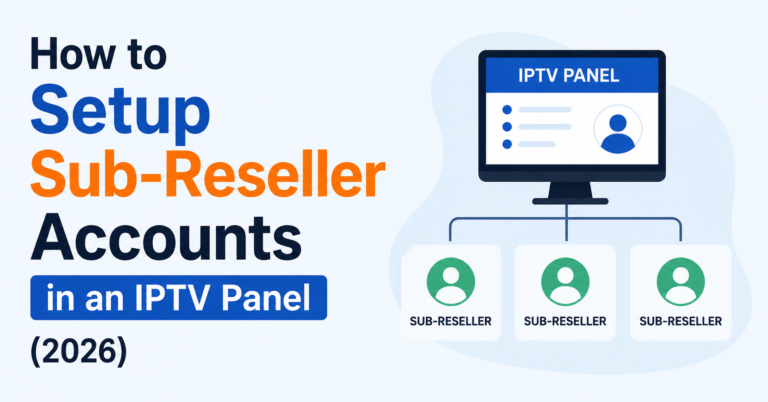
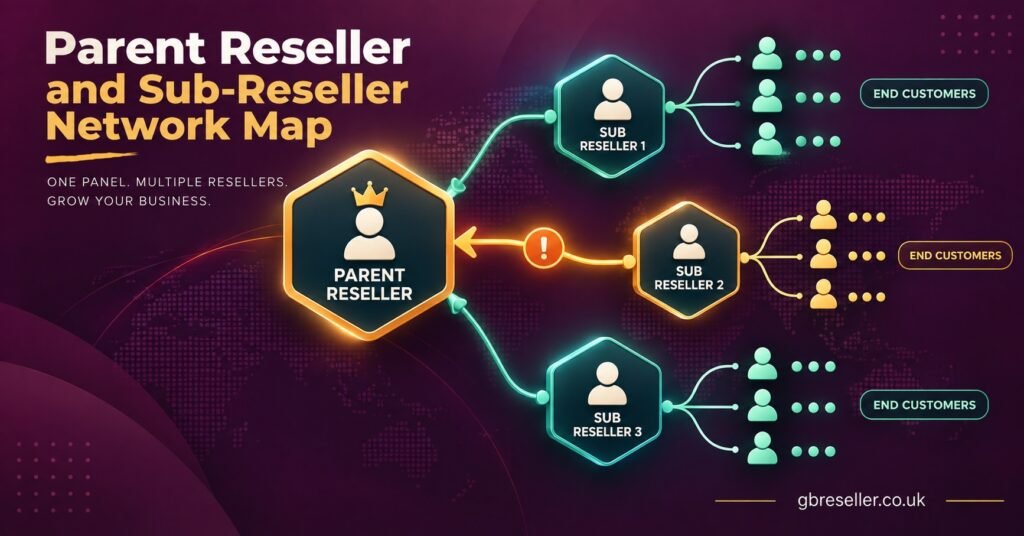
If you run sub-resellers, treat them as their own group with separate rules. They are wholesale buyers, not viewers, and their needs are commercial: predictable credit pricing, clear permissions, fast answers when their own customers have problems, and certainty about who owns the end-customer relationship.
Sub-resellers can be segmented in much the same way as subscribers. Some buy credits steadily and rarely need help. Others buy in bursts, sell cheaply and send their customers’ problems straight to you. That second pattern creates downstream support load you are not being paid for, and it can hurt your reputation with end users who never knew your name.
Watch credit purchase frequency, the ratio of support escalations to credits bought, and how often their customers appear in your own support queue. A sub-reseller who buys a moderate volume but escalates constantly may cost more than they earn you. A frank conversation about support boundaries, backed by written terms, is usually more effective than quietly absorbing the load.
Keeping Customer Data Lean and Lawful
Segmentation involves holding information about people, so collect only what you actually use. For most IPTV panel resellers that means a contact method, line reference, dates, package details, device type and support notes. There is rarely a good reason to hold more.
In the UK, customer records fall under UK GDPR, and marketing messages sent by email or text are also covered by the Privacy and Electronic Communications Regulations. Renewal reminders about an existing service are generally treated differently from promotional offers, but marketing to existing customers still requires a simple way to opt out. Other English-speaking countries have their own data protection and anti-spam rules, so check the requirements where your customers live rather than assuming UK rules apply everywhere. If you are unsure, the regulator’s guidance for small businesses in your country is the right starting point, not a forum post.
It is also worth being clear that segmentation is a customer-management technique. It says nothing about whether a service is authorised. IPTV is a delivery technology, and whether content can be lawfully supplied depends on rights and permissions, not on how well the customer base is organised.
Where Segmentation Goes Wrong
The most common failure is building too many segments. Twelve categories look thorough in a spreadsheet and then nobody maintains them. Four or five groups you actually act on will outperform a detailed system you check once.
The second failure is segmenting without changing anything. If early renewers and lapsed customers still receive identical messages at identical times, the tagging has been wasted effort.
A third issue is reading segments as fixed labels. A customer tagged “high support” in spring may be completely settled by summer after a device upgrade. Review tags regularly, or you end up treating people according to old problems.
Finally, some resellers use segments purely to decide who gets discounts. Price is only one lever. Timing, setup help, plan length and communication style often matter more, and they do not reduce your margin. Churn has a direct effect on income, which is covered in more depth in this look at how churn shapes UK reseller earnings.
Questions Resellers Ask About Segmentation
How many customers do I need before segmentation is worth doing?
There is no fixed threshold. Even with a small base, tagging renewal behaviour and device type helps. The benefit grows as the base grows, because you can no longer remember every customer’s history.
Do I need a CRM, or will a spreadsheet do?
A consistent spreadsheet is enough for most small and medium operations. A CRM becomes useful when several people handle support or when you want automated reminders by segment. The discipline of consistent tagging matters more than the tool.
Should different segments pay different prices?
Charging the same package at different prices by segment tends to cause resentment when customers compare notes. It is usually better to keep list prices consistent and vary plan length offers, loyalty gestures and support priority instead.
How often should I review segments?
Monthly works well for most resellers, timed just before the busiest expiry period. Device-specific segments should also be checked whenever a player app or firmware update causes problems.
Putting It to Work
IPTV Customer Segmentation for IPTV Panel Resellers is less about clever analysis and more about noticing that your customers are not all the same, then acting on it. Group lines by renewal behaviour, plan length, device, household size and support load; give each group the messages and help it actually needs; and treat sub-resellers as a separate commercial segment. It will not fix an unreliable service or poor support on its own, and it will not guarantee renewals.
What it does is stop you spending the same effort on every account and show you where customers are likely to leave before they go. A sensible next step is to tidy your existing line records this week and add just three tags: device, renewal habit and support contacts.
Reseller Segmentation Checklist
- Standardise how devices and package lengths are written in your records
- Tag every active line with renewal behaviour, even if it starts as “unknown”
- Log support contacts with a date and a short reason
- Set up staged renewal reminders for reminder-dependent customers
- Offer longer plans to returning customers instead of repeat discounts
- Keep a device list ready so you can message affected users during app issues
- Review sub-reseller escalations against the credits they buy
- Remove customer data you no longer use and include an opt-out on marketing messages
- Revisit every tag once a month before your main expiry batch