
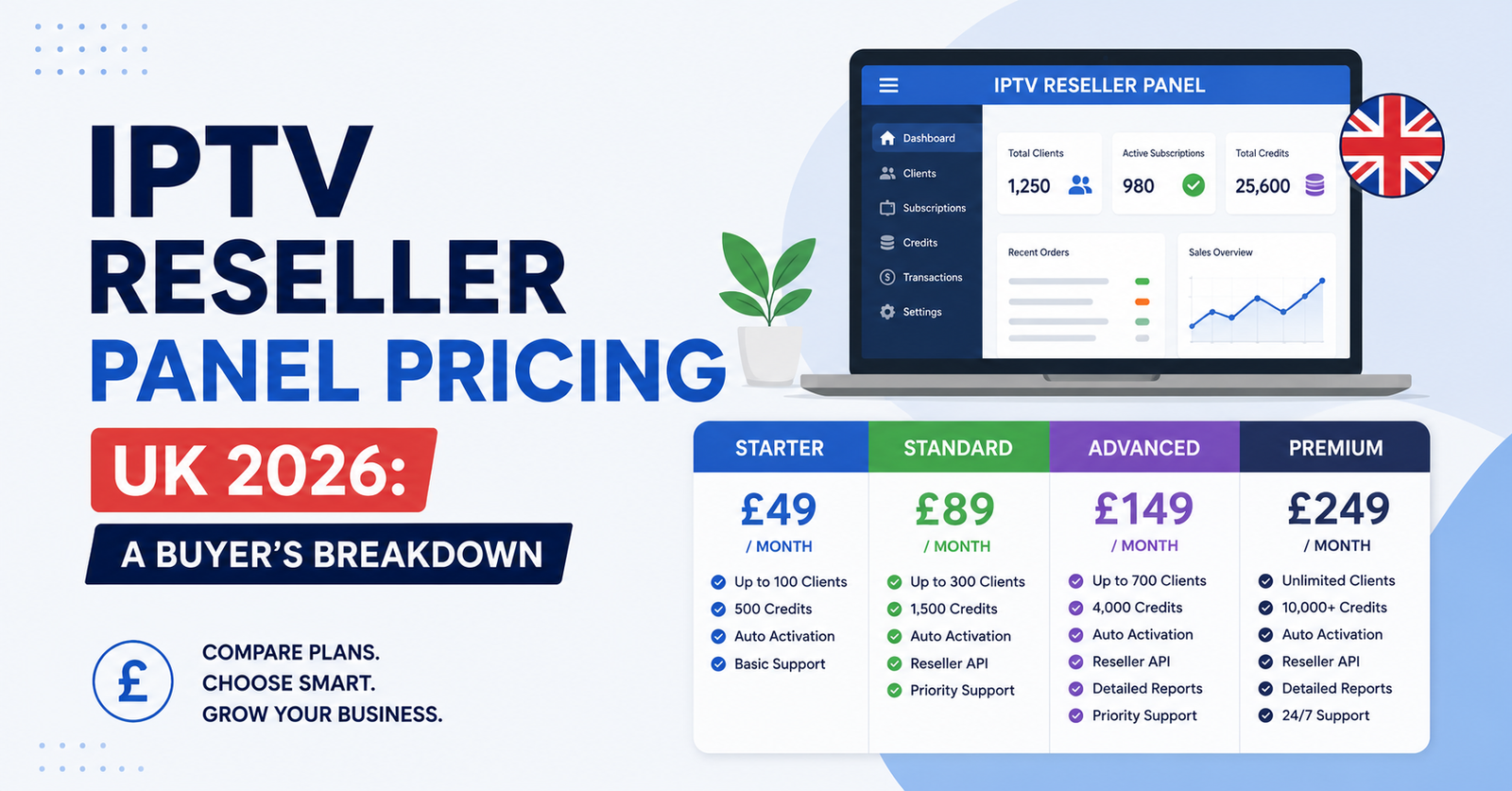

Most people searching for IPTV reseller panel pricing UK aren’t after a single number, because there isn’t one. What you pay depends on how many credits you buy, how those credits are priced per tier, and what the provider bundles in as standard rather than as an add-on. A small starter package might land somewhere in the tens of pounds, while a bulk order pushes the per-credit cost down sharply, and the gap between the two can be the difference between a hobby side hustle and a business with real margin.
Understanding IPTV Reseller Panel Pricing UK Before You Buy
Reseller panels are almost always sold through a credit system rather than a flat monthly fee. One credit typically activates one subscriber line for a set period, usually a month, and you buy credits in blocks. The headline price on a provider’s pricing page is really just the entry point into that credit structure, not the full picture of what running the business will cost you.
This matters because two providers can advertise similar starting prices while having very different economics once you scale. A panel that looks cheap at 30 credits might become expensive at 200, or the reverse. Reading past the front-page number is the first real step in working out genuine cost.
How Credit Tiers Actually Work
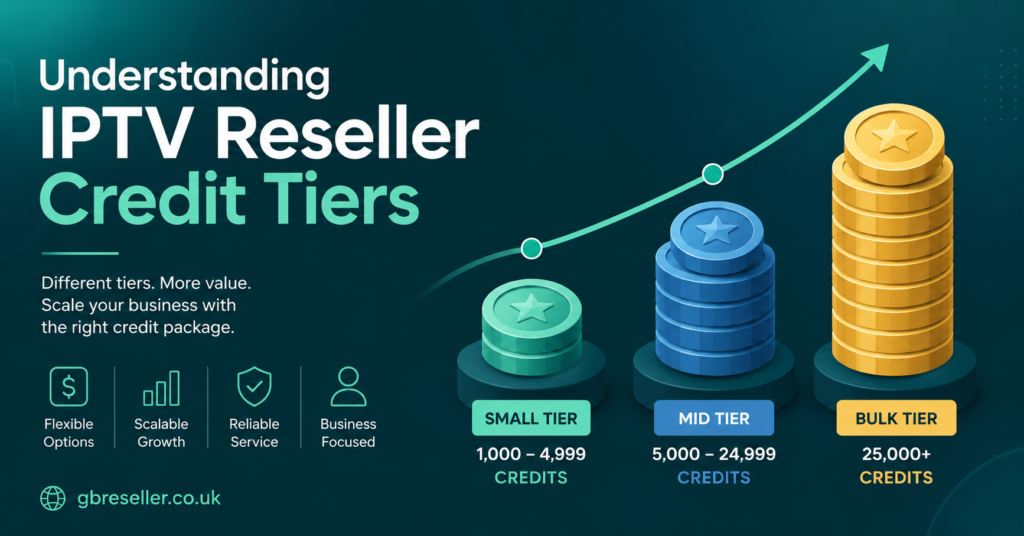
Providers structure their packages in bands, and the per-credit cost drops as the band size increases. A small test package aimed at someone dipping a toe in the water will carry the highest per-unit price. A mid-sized pack for someone running a few dozen subscribers usually sits in the middle. A bulk pack aimed at established resellers running well over 100 lines brings the sharpest discount.
The logic is straightforward from the provider’s side: bigger orders mean less admin per credit sold, so they pass some of that saving on. From your side, the decision isn’t just “which tier can I afford” but “which tier matches how many subscribers I can realistically sign and support right now.”
Pro tip: Don’t buy the biggest tier purely because the per-credit rate looks best on paper. Unused credits sitting in your dashboard are money that isn’t earning you anything.
Here’s a rough shape of how tiering tends to work across UK-facing panels, without attaching invented figures to any single provider:
| Package size | Typical buyer | What to check |
|---|---|---|
| Small (under 50 credits) | First-time resellers testing the panel | Refund window, dashboard usability, support response time |
| Mid-tier (50 to 100 credits) | Resellers with an established but growing customer base | Whether the per-credit price actually improves, or just the label changes |
| Bulk (100+ credits) | Established resellers running multiple subscriber lines | Whether credits expire, and whether pricing is locked at purchase |
What Isn’t Included in the Advertised Price
The number on the pricing page rarely tells you about everything that affects your actual cost of doing business. A few things worth checking before you commit:
Multi-connection support is sometimes bundled as standard and sometimes charged as an upgrade. If your customers expect to watch on more than one device at once, confirm this before assuming the base price covers it.
Support quality doesn’t show up on a price list at all, but it affects your costs indirectly. A provider that takes two days to answer a WhatsApp message during a server issue will cost you customers, refunds and reputation, even if their credits were the cheapest on the market.
Credit expiry policies vary. Some providers let credits sit unused indefinitely, others quietly build in expiry windows. A cheap credit that expires before you use it isn’t actually cheap.
Pro tip: Ask directly whether prices are locked at the time of purchase or subject to change later. A provider that reserves the right to raise the cost of credits you’ve already bought is shifting risk onto you after the sale.
Where Margin Actually Comes From
Your profit is the gap between what you pay per credit and what you charge your subscriber. UK subscriber pricing for a reliable single-connection line generally sits in a range that reflects what customers are used to paying for streaming access more broadly, so undercutting aggressively to win customers usually erodes margin faster than it builds volume.
Experienced resellers tend to price based on what the service is worth to the customer, not purely on matching the lowest figure they’ve seen advertised elsewhere. A subscriber who gets a stable connection, a working EPG and quick support is generally happy to pay a fair monthly rate rather than chase the cheapest IPTV Panel reseller in a group chat.
Reseller Considerations Beyond the Headline Number
If you’re running or planning to run a reseller dashboard, a few operational factors sit alongside the raw pricing question:
How many subscriber lines can you realistically onboard and support in your first month? Buying credits you can’t sell yet ties up cash that would be better spent scaling gradually.
Does the panel let you extend or renew existing subscriber lines without burning a fresh credit each time? This affects your real cost per active customer over a year, not just per activation.
Can you see your credit balance and usage clearly in the dashboard, or do you need to contact support to check? Poor visibility here makes it harder to plan your next purchase accurately.
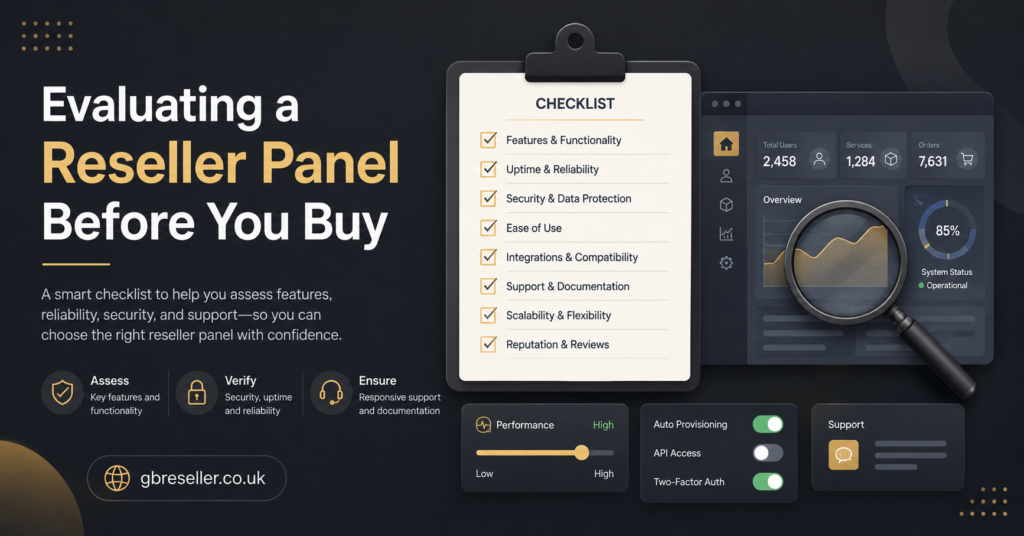
Provider Evaluation Checklist
- Confirm whether the advertised price is per credit or per package
- Ask if credits expire and, if so, after how long
- Check whether multi-connection support is included or an extra cost
- Find out if pricing is locked at purchase or can change later
- Test how quickly support responds before you commit to a larger package
- Compare the per-credit rate across at least two tiers from the same provider
- Ask what happens to unused credits if you decide to stop reselling
Frequently Asked Questions
Is a cheaper credit price always the better deal?
Not necessarily. A lower per-credit cost means little if credits expire quickly, support is slow, or multi-connection access costs extra on top. Compare the full package, not just the headline figure.
Do reseller panel prices in the UK change often?
Some providers adjust pricing periodically, particularly for new stock or seasonal offers. Providers that lock in your price at the point of purchase protect you from later increases on credits you’ve already bought.
How many credits should a new reseller start with?
Most people starting out are better served by a smaller package that lets them learn the dashboard and build a handful of subscribers before committing to a bulk order they may not use for months.
Does a bigger package always mean better margin?
Only if you can actually sell the credits within a reasonable timeframe. Sitting on 200 unused credits ties up money that a smaller, faster-moving package wouldn’t.
What’s the difference between per-credit price and per-subscriber cost?
Per-credit price is what you pay the provider. Per-subscriber cost also factors in time spent on support, occasional refunds, and any features you pay extra for. The second figure is the one that determines your real margin.
IPTV reseller panel pricing UK ultimately comes down to matching the right credit tier to how many subscribers you can genuinely support, not chasing the lowest number on a pricing page. Check what’s actually included in the price, confirm whether it can change after you’ve paid, and choose a package size that fits your current customer base rather than the one that looks best in isolation. If you’re weighing this up for the first time, it’s worth looking at current credit packages and comparing what each tier actually includes before deciding how much to commit.